President Donald Trump’s relationship with women is contentious at best. With a history of inflammatory comments and sexual assault allegations, he is far from a model feminist. Yet his second term featured a cabinet that was one-third female, a record for Republican presidents. Secretary of Homeland Security Kristi Noem and Attorney General Pam Bondi were prominent members. By April, however, Trump had sent the two home.
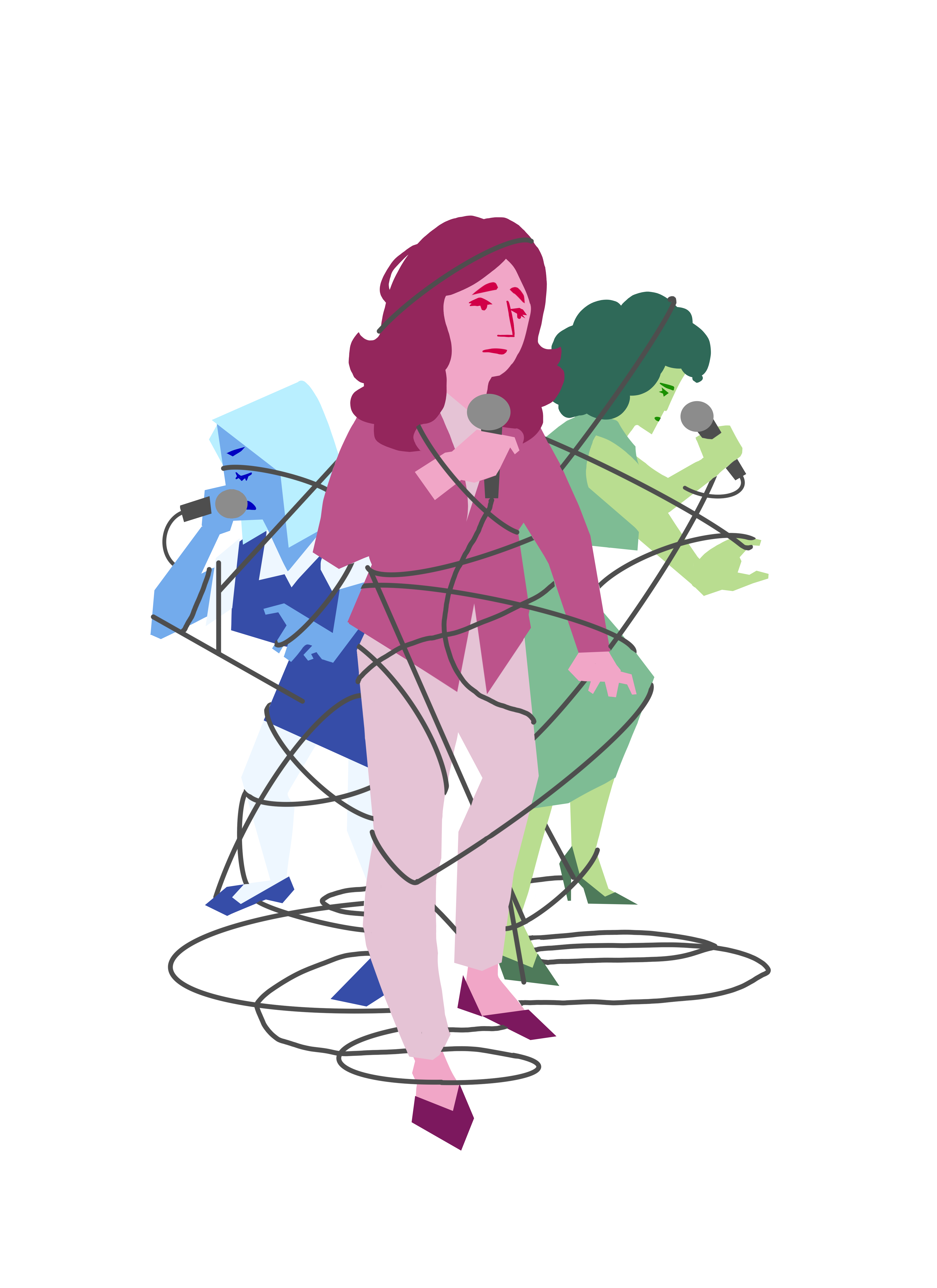
Gender dynamics in Trump’s cabinet appointments (and subsequent dismissals) suggest that the ‘glass cliff’ phenomenon, first coined in 2005 by psychologists Michelle Ryan and Alex Haslam, is now playing out on our country’s most visible stage: Women are selected for leadership roles during times of controversy, positioning them to deal with the inevitable fallout. This dynamic redistributes blame and reinforces the perception that women are incapable of handling executive leadership roles.
Noem and Bondi’s dismissals push forward the hypothesis that female leaders are treated as scapegoats during tenuous situations, obscuring the decisions made at the top of the Trump administration. As Secretary of Homeland Security, Noem was appointed to oversee the implementation of President Trump’s aggressive immigration crackdown, a central yet immensely controversial pillar of the administration’s agenda—a tension the President was well aware of. The US Immigration and Customs Enforcement (ICE)’s infringement on civilian safety was inevitable: Selection rigor and training time have both drastically decreased in order to multiply the deployable officer count. As a result, by early 2026, immigration enforcement operations in Minneapolis led to the deaths of two US citizens during encounters with federal agents, sparking national protests and congressional investigations into immigration authorities’ conduct. As the face of the Department of Homeland Security, Noem was placed at the center of public criticism, called to defend these actions publicly, despite heightened enforcement being one of Trump’s key policies on the 2024 campaign trail. As public outrage mounted, Trump removed Noem from her position, pointing to an allegedly unauthorized $220 million border security advertising campaign featuring the secretary.
Bondi faced similarly intense scrutiny as Attorney General while handling the hotly controversial Epstein files. Given that the documents were initially ordered to be released in December 2023 and Trump’s name was associated with Jeffrey Epstein prior to Bondi’s cabinet appointment, Trump’s appointment of a female attorney general showed frightening foresight that she could become a scapegoat. He quickly soured on Bondi’s “botched” handling of the rapidly unfolding Epstein case, privately complaining about her shortcomings as a communicator. On April 2, she was fired. But characterizing Bondi’s tenure as uniquely poor obscures the near-impossible situation she was put in: investigating a criminal case that implicated the very superior by whom she had been appointed.
Trump’s cabinet shows a clear pattern of women being forced to absorb the backlash of controversial policy decisions made by their male superiors. This dynamic reveals that the glass cliff is a result of deliberate and predictive placement, not coincidental appointments. Whether or not Noem and Bondi were strategically selected as the faces of two of Trump’s second administration’s greatest controversies, conservative media outlets’ eagerness to criticize these women’s poor conduct instead of Trump’s verifies that scapegoating is a major factor of the glass cliff. Fox News has since called Noem an “utter, complete, total catastrophe,” blaming Noem rather than the administration itself for the “hyper-aggressive approach of ICE in Minneapolis.” During her tenure, Bondi was called a “shrieking Karen” by an anchor at Fox, an explicitly gendered phrase highlighting the normalization of bad-faith rhetoric, which leaves women particularly susceptible to political scapegoating.
Noem and Bondi were both positioned to fail. Their oustings make it clear that Trump’s female cabinet appointments are a political strategy rather than a genuine push for gender equity. Women in Trump’s cabinet are selected to defend the administration’s most controversial decisions. When they fail, they become convenient scapegoats to maintain the appearance of accountability without changing underlying policies, reinforcing existing skepticism about women occupying space in politics. Let us hope that the remaining women in Trump’s cabinet have other jobs lined up—it may only be a matter of time.
This article was written and edited before the resignation of former US Labor Secretary Lori Chavez-DeRemer, announced via X on April 20, 2026, amidst internal pressure from multiple scandal investigations. Chavez-DeRemer was the third high-level Trump Cabinet member to leave in early 2026. All three have been women.