Lies can blend with the truth when they are crafted correctly, and politicians have long practiced creating such lies. Recently, unsupported claims discrediting the medical community have increased as politicians grapple for power after the Covid-19 pandemic. The Trump administration has perpetuated false statements about health, eroding public trust in medicine and benefiting the administration.
In US politics, there is a growing trend of politicians weaponizing the medical field to discredit their opponents, particularly beginning with the Covid-19 pandemic. Controversy surrounding the control of the disease offered an opportunity for President Donald Trump, officials within his administration, and other politicians to demonize their political opposition. This was best illustrated when Trump called Covid-19 a “hoax” perpetrated by the Democratic party, while other Republican politicians attacked public health officials like Dr. Anthony Fauci, claiming these scientists were working with Democrats to create said hoax. Democrats were not exempt from these tactics either. During the pandemic, many Democratic leaders personally attacked President Trump, calling his response “wrong” and “dangerous.” This type of discourse is unproductive, shifting public focus away from the health issues at hand and bringing partisan politics to center stage, as each side attempts to discredit the other and prove that their opponents are liars. This partisan bickering is nothing new; instead, what is concerning and noteworthy is that this hostility has expanded to encompass medical professionals. In US politics, dragging the medical community through the mud in an attempt to best one’s opponent has become an increasingly prevalent strategy. Such rhetoric allows those in power, like President Trump, to rouse their voter bases and win political support, but it comes at the cost of discrediting institutions that are vital to the protection of the US public.
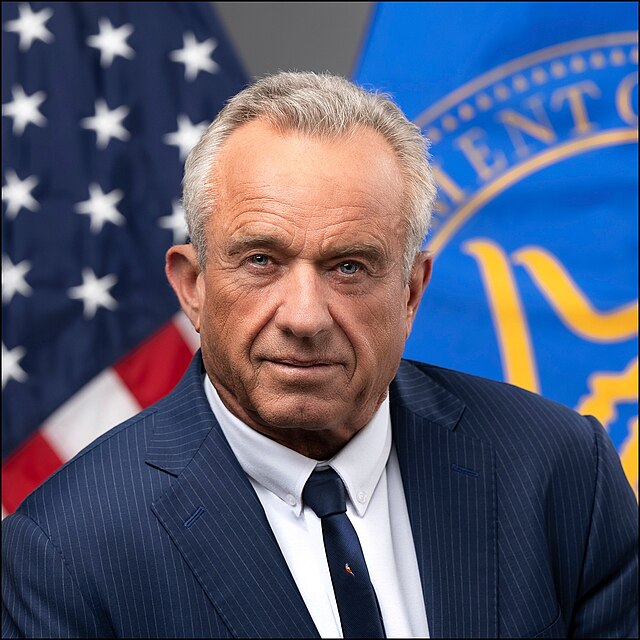
The Trump administration’s strategy of villainizing the medical community did not end after the Covid-19 pandemic. In fact, in his second term, Trump has amplified his attacks against medicine. Trump recently announced that Tylenol can cause autism when taken by pregnant women, even going so far as to manipulate clinical trial data to support his claim. Medical experts have come out to assure the public this is not the case, however this response has been insufficient. Additionally, his chosen head of the Department of Health and Human Services, Robert F. Kennedy Jr., has made claims that vaccines, antidepressants, and food dyes are dangerous to the health of Americans, in direct contradiction with scientific evidence.
Now, the public must decide who is more credible: the medical community or the claims of politicians. For some Americans, the politicians are beginning to pull ahead. A survey conducted in January of 2025 shows that among Republicans surveyed, respondents trust Donald Trump on health decisions just as much as their own doctor. These numbers are shocking, especially when coupled with other data points in the survey. Only half of the public surveyed has a “great deal” or “fair amount” of trust in the Center for Disease Control (CDC) to provide vaccine information. This is down from 57 percent in July and 63 percent in September of 2023. This astonishing decline speaks to the magnitude of the attacks employed by the Trump administration and other politicians. One poll taken after Trump’s Tylenol claims revealed that 57 percent of Republican respondents and 35 percent of all respondents believe that Tylenol use during pregnancy may increase the risk of the child developing autism, a claim created by erroneous data and lies.
As the Trump administration continues to villainize the medical community, they are no longer simply trying to beat Democratic opponents: They are manipulating the trust of the American public by creating a sense of danger or insecurity. They have formed a list of medical enemies that the public must be protected from: Dr. Fauci and the Democrats who created Covid-19, vaccines, food dye, and painkillers, among others. As the list of enemies grows, so does the need for a dashing hero to come in and save the day. Trump’s criticism of the medical community and willingness to make swift claims have presented him as such a hero. He has made it clear he is willing and able to take on these issues in the name of “protecting” the American public. This narrative of protection preys on the emotions of Americans.
Even if a parent believes their child’s doctor, it is not implausible that, at the end of the day, they go to bed with RFK Jr.’s falsehoods in the back of their mind, wondering what could happen if he turns out to be right.Slowly, but surely, their foundations of trust in existing medical institutions will be eroded. Everyone wants to protect their loved ones, and politicians battling medical professionals are capitalizing on this fact. As politicians continue to manipulate the US public, the medical community must address the emotional response involved in order to win back their trust. While the medical community has come out against the claims of Donald Trump and other officials, repairing the damage will take more than data and research. While this will be an uphill battle, it is a necessity—the lack of trust in medical advice will lead to devastating consequences.
A recent measles outbreak in Texas led to the death of two school-aged children who were not vaccinated. It is clear that when children are not vaccinated against certain diseases during an outbreak they remain vulnerable. RFK Jr. has contributed to this issue, consistently working against vaccines (including chairing an anti-vaccine organization). Interestingly, after meeting with the families of these children who died in Texas, RFK Jr. endorsed the measles, mumps, and rubella (MMR) vaccine in a post on X. This is a stark reversal, indicating that his claims—which have put children in direct danger—are not as airtight as he would have people believe. He claims vaccines are harmful as an attempt to gain political support from a specific base, but when attacking vaccines is no longer politically opportune, his stance shifts. As the medical community is discredited and politicians gain more influence on medical decisions, the public has gone from receiving claims supported by scientific evidence to those supported by the political environment at the time. While he may have made a social media post after facing the families of the children killed, the fact remains that rhetoric discrediting science such as that employed by RFK Jr. creates these tragedies and is completely avoidable.
The public has begun to question the scientific claims of the medical community in favor of the falsehoods presented by politicians. This distrust has been fueled by the manipulation of medicine for partisan gain during Covid-19 and beyond. While politicians present their attacks on medicine as a way to shield the American public from danger, this is not the effect; instead, as seen in Texas, it leads to outbreaks and death. While these avoidable deaths are enough to illustrate the dangers of attacking medicine, the long-term effect may be even greater. If politicians decide to continue attacking these public institutions in search of political gain, this demonization will not stop at public health, risking expansion into almost every aspect of society.