During the 18th century, the French colony of Saint-Domingue was the most lucrative in the world. Its wealth was derived in large part from sugar plantations, which were owned by a white landed class and labored on by West and Central African slaves. During Saint-Domingue’s century of French colonial rule, it supplied the majority of the Western world’s sugar and generated billions annually in today’s dollars. For the enslaved population—which constituted the majority of the colony—the working conditions were brutal: At least 500,000 enslaved Africans perished on Saint-Domingue’s plantations.
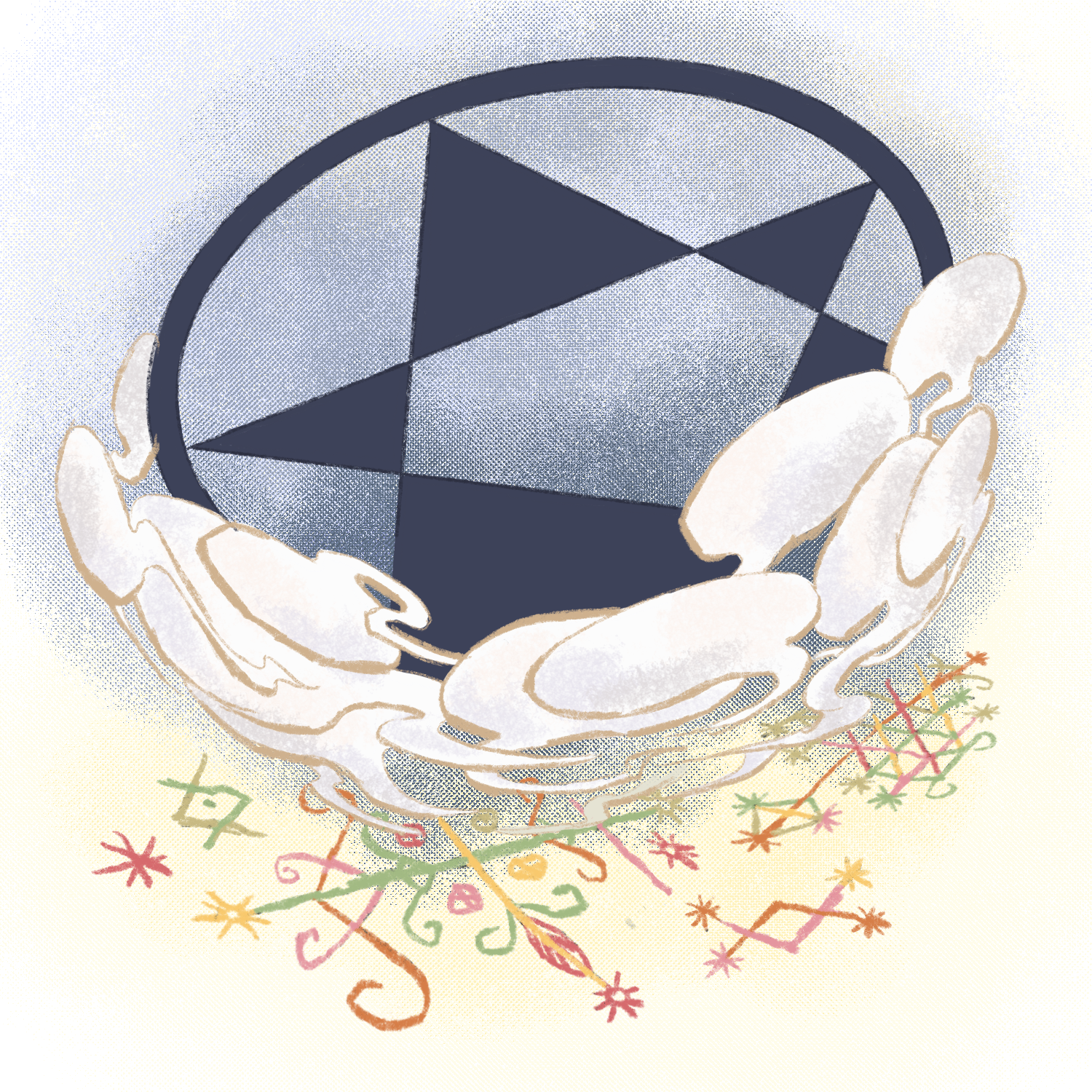
One of the few forms of cultural exchange slaves had with those from neighboring plantations was during Vodou ceremonies. Ingrained in Haitian national legend is one specific Vodou ceremony, which took place at Bois Caïman—woods in the far north of the colony. Stories tell of a fateful August night in 1791 when thousands of enslaved people gathered to hear the words of spiritual leader Dutty Boukman amid the sacrifice of a black pig and prayers to Iwa, the deities of Vodou. There, the colony’s subjugated Black population made the decision to rebel against their French enslavers, kick-starting the most successful slave revolt in history.
The details of the night shift from story to story—speakers change, locations differ, and sacrifices and prayers never quite match up. These inconsistencies have led many historians to question whether a singularly consequential ceremony ever took place at Bois Caïman. It is perhaps only a mythic representation of many ceremonies that allowed slaves to partake in the cultural exchange that fomented revolution. Regardless, the ceremony at Bois Caïman has become an integral part of both Haitian national identity and its relationship with the West. The American evangelical Christian right, however, has woefully misconstrued this mythologized ritual that took place over 200 years ago as a satanic pact. This narrative has imprinted itself onto the top rungs of the modern Republican Party, spelling harm for modern Haitians and Haitian Americans.
Bois Caïman was followed by 13 years of revolution that culminated in Haitian independence. But after liberation, the fledgling state still had to fight an uphill battle. After its revolution, American and European powers—fearing Haiti’s success would inspire their own enslaved Black populations—refused to recognize or trade with Haiti. France demanded that the nascent nation pay “reparations” to the former Saint-Domingue slave owners, crippling the nation with debt that American and French banks exploited for centuries. When an anti-American government later threatened to stop debt payments, the United States violently invaded Haiti, forcing the nation to give over 40 percent of its income to service its “debt” and forcibly changing Haitian law to best serve American interests.
To make matters worse, Haiti sits at the boundary of the North American and Caribbean tectonic plates, with a fault line running right through its capital, Port-au-Prince. Catastrophic earthquakes continually wrack the country. Some estimates conclude that the 7.0 magnitude earthquake in 2010 killed nearly 300,000 people. Although Haiti’s successful independence movement was a true underdog victory, due to this international antagonism and abject geographical unluckiness, the nation remains mired in poverty, corruption, and violence.
Starting in the late 20th century, Haiti became a hub for American evangelical missionaries. They saw Haiti’s syncretic Vodou—itself a blend of African animism and Roman Catholicism, which many Haitians now practice alongside Catholicism—as incompatible with Christianity. Many of these missionaries also believed in ‘spiritual mapping,’ the idea that earthly conflicts and tragedies reflect spiritual warfare in the supernatural realm. The theory posits that some poor nations are under “demonic possession.” Thus, missionaries are called to exorcise such demons from the nation. The popularization of this ideology among American evangelicals ascribed a distinctive abhorrence and impurity to Haiti. This rhetoric manifested most clearly in Protestant interpretations of Bois Caïman. In the wake of the 2010 earthquake, televangelist Pat Robertson famously expressed during a TV broadcast that the ritual at Bois Caïman was a satanic pact, and Haiti’s generational poverty was not due to imposed isolation or environmental tragedy but celestial revenge.
On its face, this assertion is antiquated, offensive, and puzzling; it is hardly Christ-like to curse a brutally oppressed slave population fighting for its freedom. But the narrative’s real danger lies in its modern political consequences. After his death in 2023, CNN called Robertson one of the founders of the modern GOP. He was a constant influence on the leaders who forged the Republican Party’s new conservatism, such as Ronald Reagan. Starting in the 1980s, evangelicals became a crucial pillar of the GOP, using their influence to dictate social policy. As a result, the evangelical conception of Haiti and Haitians as “cursed” wormed its way into American governance.
During the 2024 presidential debate, the night’s most viral soundbite was President Donald Trump claiming Haitian migrants in Springfield, Ohio, were “eating the dogs,” in reference to a disproven rumor that was spreading on social media. During the vice presidential debate, Vice President J.D. Vance targeted a specific type of visa status disproportionately used by Haitians as “illegitimate.” While Trump and Vance did not specifically reference Haiti or Vodou during the debates, Louisiana congressman Clay Higgins (R-LA) was more explicit. On X, he posted “Lol. These Haitians are wild. Eating pets, vudu [sic], nastiest country in the western hemisphere, cults, slapstick gangsters,” thus connecting Haitians’ supposed “nastiness” to Vodou. During the public backlash, Speaker of the US House of Representatives Mike Johnson (R-LA) called Higgins a “principled man” and “dear friend.” As many would say, Higgins had “said the quiet part out loud” and illuminated the reasons behind the fabricated, repeated inflammatory attacks on such a specific diaspora. Haiti’s Vodou identity, as exemplified by Bois Caïman, made Haitian migrants uniquely “dirty” and thus threatening.
The widely circulated claims about the consumption of pets increased racial and ethnic discrimination, but since Trump’s victory, Haiti and Haitians have also suffered policy setbacks. Shortly after taking office, the Trump administration cut hundreds of thousands of Haitians’ protected status, aiming to send them back to a country plagued by gang violence. In June, Trump instituted a travel ban on Haiti, citing concerns that Haitians would overstay their visas. The policy has left many Haitian families indefinitely separated, and it threatens Haiti’s remittance economy, which makes up about a fifth of the nation’s GDP.
The ceremony at Bois Caïman will always be veiled in mystery and shrouded in uncertainty, yet it has become real through its enduring power to shape modern perceptions of Haiti’s unique history. In Haiti, commemorations of the ceremony have served as important markers of identity, nation-building, and resistance against colonial oppression. Fictionalizations of the event by evangelicals, however, have allowed the United States to continue to interfere with and subjugate the Haitian people. Instead of pointing fingers at spiritual evil, we must acknowledge the evil of our own doing.