The BPR High School Program invites student writers to research, draft, and edit a college-level opinion article over the course of a semester. Alisson Archila is a senior at Paul Cuffee High School in Providence, RI.
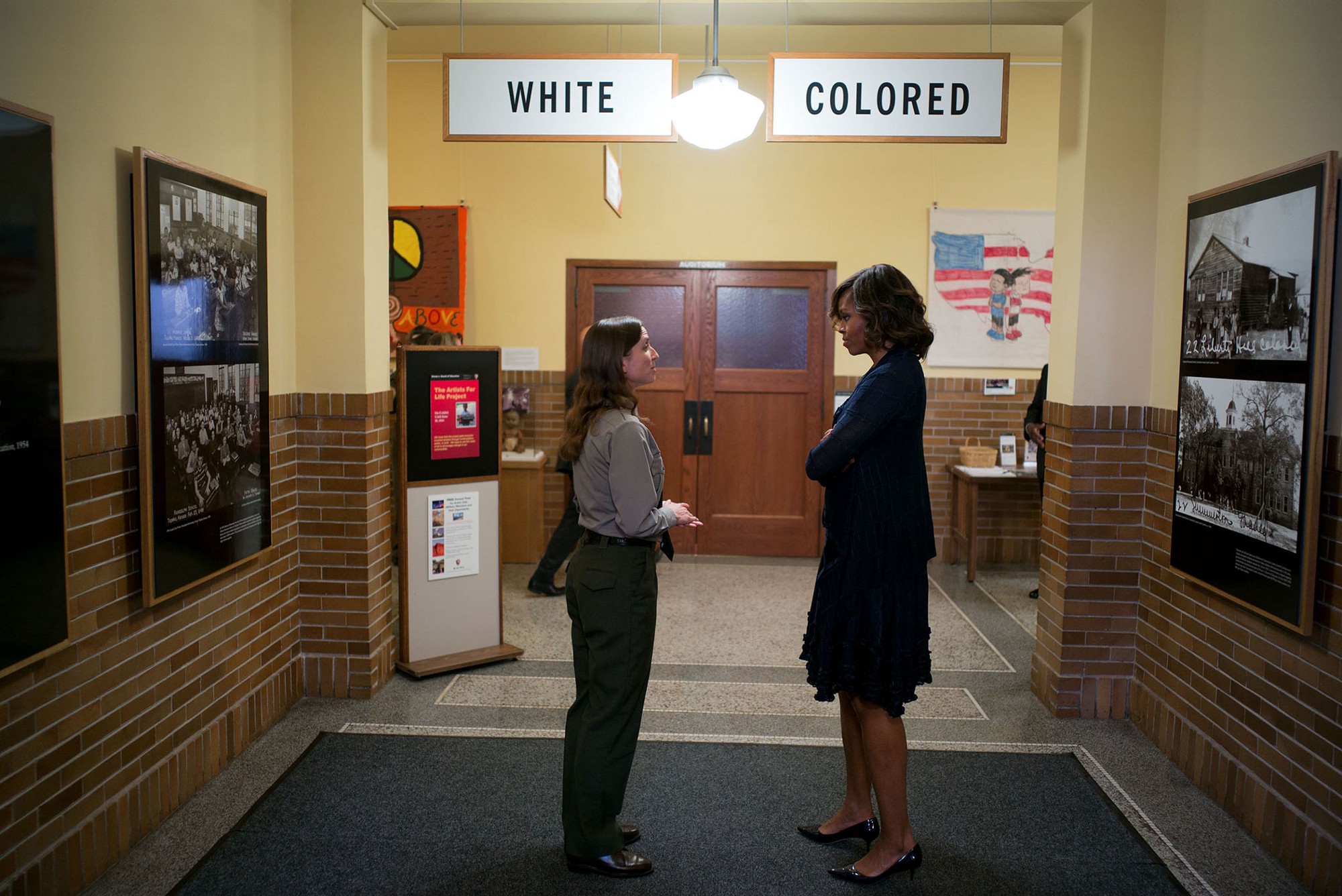
The landmark Brown v. Board of Education Supreme Court ruling abolished segregation in schools across the country. Although it’s easy to assume that this ruling immediately put an end to blatant racism in the classroom setting, the outcome merely enabled the implicit practice of it. Today, as diverse as the United States is, that diversity continues to not be valued in schools across the country. Unfortunately, simply ruling that segregation is unconstitutional does not translate to stopping that segregation from happening entirely.
Our current school system places students of color at a significant disadvantage compared to other students due to factors such as redlining, white flight, underfunding, the harsh punishments for students of color compared to their white peers, and a lack of diversity in classrooms. Proper funding for schools and a diverse classroom environment are essential to ensure greater success in their futures. However, schools across the country have failed to implement equitable opportunities to all students regardless of their race, perpetuating education inequality. This problem has lasting impacts that harm students and people of color beyond the education system.
School segregation reflects a long history of racial discrimination and inequality in the U.S., demonstrating that it is not an isolated issue. Inequitable practices are a result of the historical disadvantages that people of color have faced since they were brought to the United States and enslaved. These disparities are certainly not new, and they’re certainly not gone. Author and activist Kimberly Jones put it best when she described how people of color have constantly been subject to disadvantages because of their race. She uses Monopoly as a way to describe the 400 years of slavery in America: “For 400 rounds of Monopoly, they weren’t allowed to have any money or anything on the board, then for another 50 rounds, and everything that [they] gained was taken from [them].” She describes the racially motivated massacres that happened to thriving, predominantly African-American places like Tulsa, Oklahoma and Rosewood, Florida. People of color built black economic wealth, were self-sufficient, owned stores, and owned property, just for all of it to be burned to the ground by a group that is known for their explicit racism: the Klu Klux Klan.
This is the reality, not only for black people, but for other minority groups. If you work your way up, you’ll get to a point where you can send your children to a properly funded school, right? Not if minorities are desperately still trying to make up for 450 years of constantly being put down, and certainly not if they’re still trying to build back what was taken from them. “Catching up” with the rest of the country is nearly impossible with racially motivated tactics preventing them from doing so. School segregation shows how people encounter racial disadvantages in their day-to-day lives. It’s a harsh reality that persists in society today.
One major way in which the education system continues to place students of color at a disadvantage is through the practice of redlining. Although it is illegal today, the practice demonstrates that abolishing school segregation in 1954 consequently increased the use of obscured practices to keep diversity from growing. People used racially motivated tactics, like redlining, to keep black families from leaving their districts, isolating them and their schools in the process. Redlining is a long-standing banking practice that historically blocked people of color from getting mortgages, and although it was not intended to affect schools specifically, the practice had the lasting effect of decreasing diversity in schools and perpetuating socioeconomic inequality.
Since many school districts rely on geographical location to determine which school a student can go to, redlining made it so that people of color were forced to remain in their district, even if they had the money to pay a mortgage. Despite the abolishment of redlining in 1968, it remains a full blown operation that happens behind closed doors. Because homes owned by white families are often valued higher than homes owned by families of color, they play a substantial role in determining the value of schools. Both public and private schools receive some kind of federal funding. Public schools get 13 percent of their funding from the federal government. Since high-performing school districts often have higher property taxes, white families, being the families who pay those taxes, have the upper hand. This is the unfortunate reality for many minorities in America: they face structural limitations to their education because of their race.
Aside from the continued perpetuation of redlining, white flight is another phenomenon that has impacted diversity in school systems. White flight is a term used to describe the migration of White residents from urban areas to suburban regions, largely driven by a desire to avoid racial integration, and was one of the ways that white families fought back against desegregating schools. In many areas, mostly the South, white students left public schools to enroll in private schools, further isolating themselves from the growing diverse population. They found a way to legally segregate themselves.
Private schools became a prominent method to keep students of color and white students separated after Brown v. Board of Education, and US private schools continue to have predominantly white student populations. Schools lose their diversity as the division continues, and we go back to square one. The fact that schools continue to be impacted by these demographic issues show the extent to which many white families have fought back against the increasing diversity in schools. Although desegregation is unconstitutional, many have continued to do everything in their power to keep their schools segregated.
Schools with a high population of minority students are significantly less funded than schools with a high population of white students. On top of the desegregation efforts in schools, studies show that white districts receive 23 billion dollars more in funding than minority districts. The inequalities when it comes to funding directly contribute to disparities in student outcomes, reinforcing cycles of poverty and educational disadvantage. Grades look different due to the limited number of teachers, and less minority students will be enrolled in advanced placement courses because there wouldn’t be enough money for their schools to afford them. Because minority students don’t have access to as many resources as white students, they consistently score lower on standardized tests. If these differences in quality of education continue, minority students will continue to be placed at a significant disadvantage that they cannot control, allowing these inequalities to continue. Thus, if these inequalities aren’t resolved, racial disparities could continue to grow into an even greater problem, and the difference in academic achievement between minorities and white people may continue to expand.
Racial bias and prejudice within schools also perpetuates discriminatory practices against students of color. Students of color, particularly black students, are more likely to receive school punishments, such as suspensions and expulsions. They are also more likely to face law enforcement and school-based arrests. Not only are they punished more often, but they’re also punished for lower level infractions when compared to white students. Even when committing the same infractions, black students tend to receive a harsher punishment than a white student. Students who continuously face these punishments within schools are also much more likely to face incarceration in the future, creating a cycle of punishment. Not only do these disciplinary practices show little evidence that exclusionary practices make schools safer or deter future behavior, but they’re also invoking racial injustice by implementing harsher punishments to students of color. Since they’re receiving this treatment from the teachers and staff members of their schools, it becomes even more difficult to fight back against these injustices.
Despite the glaring persistence of racial inequality in schools, some people may argue that racial segregation and inequalities are mostly behind us. In fact, a shocking 45 percent of people believe that racial segregation does not exist. If one were to ask those adults about racial segregation in schools, they would answer similarly: that it no longer exists. Although in our current day and age, segregation is, for the most part, completely abolished in the United States, it still lingers in our society and our school systems. There is still a long way to go in this fight for equality in education. If we ignore the current discrimination and racial prejudice that is present, progress will continue to be delayed, and students will continue to be harmed by school segregation.
Diversity isn’t simply something that would be “nice to have,” nor should it be implemented to pity students of color. America is made up of an incredibly diverse population, making diversity in schools both necessary and beneficial to implement. Racially diverse classroom settings open students’ minds to different perspectives and cultures. These settings promote critical thinking, not just of students’ own lifestyles, but of other people’s ways of living. As the country continues to become more and more diverse, it’s important to cherish that diversity into classrooms. This will make our future generations more comfortable with the variety of cultures that they will encounter in the country, improving their ability to thrive in any environment they join.
A more equitable school system not only relies on increased diversity, but also better funding. More students are able to succeed in school when they receive adequate funding, and it is proven that increased spending on education leads to better student outcomes. Particularly for disadvantaged students, those achievements are far greater. This means that all students, regardless of their background, can rise to the occasion and show significant improvement in their classes when their schools receive greater funding. Consistent and equitable funding among all schools has proven that their backgrounds do not define whether or not they can thrive in a classroom setting. Their race doesn’t define their ability to learn. Therefore, the funding that schools receive should be distributed equally and should be spent on expanding the resources and opportunities for students. More access to advanced placement courses and more frequent preparation for tests can make all the difference for their academic careers, when provided with those resources. Students can achieve incredible academic heights if given the chance.
People in power, along with the rest of society, must continue to fight the implicit and explicit racism found in our school systems. If this segregation in schools across America continues, this cycle of inequality will never end. This problem is not just about race and inclusivity. It’s about everyone receiving fair treatment and equal opportunities in their education. We’ve come a long way since Brown v. Board of Education, but we still have a long way to go. Minority students have historically faced and are continuing to face disadvantages that interfere with being able to succeed academically. Because of this, we must continue on with the legacy of those who fought and before us. Let’s continue to stand up to these injustices. Brown v. Board of Education taught us that our advocacy for equality can cause great changes in society, and that no one is superior or inferior to one another. We are all people–people with voices, with rights, with the power in our hearts to make a change.