The “Lost Decade(s)” that have beleaguered the Japanese economy are rarely lost on anyone. In 1985, the Plaza Accord strengthened the Japanese yen. This, alongside overzealous financial deregulation, fueled an asset bubble that eventually burst in 1991. Sky-high asset prices and land values cratered, roiling property and financial markets. Since then, a complete recovery has eluded Asia’s aged giant. Against a lamentable backdrop of protracted deflation and sluggish economic growth, Japanese policymakers and state officials have long danced, albeit ungainly, to the same old tune: Stimulating economic activity while minimizing public debt.
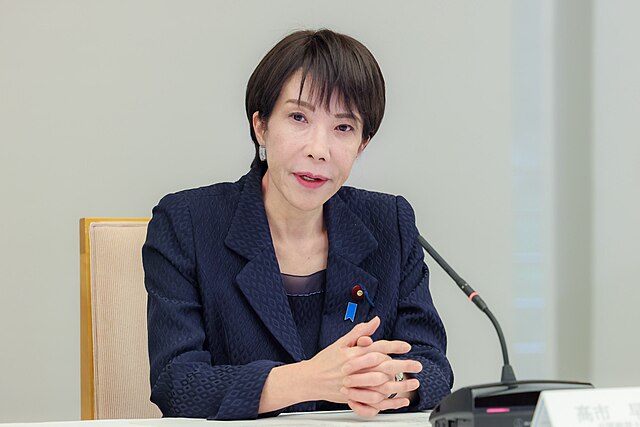
Today, however, Japan is about to encounter a different inflection point in its macroeconomic undercurrents. As Japan increasingly grapples with inflationary pressures instead of its deflationary woes, the newly elected Prime Minister Sanae Takaichi must pursue expansionary policies in a more measured manner. However, this is unlikely, as political headwinds may encourage more extreme and arguably populist economic stances.
The dizzying array of economic policies Takaichi has proposed can be broadly categorized into fiscal expansion and monetary easing, both of which are expansionary policies that encourage economic production and growth. Fiscal expansion entails increased government expenditure in infrastructural development and strategic industries such as artificial intelligence and semiconductors, shipbuilding, quantum technology, and the digital and green sectors. It also includes plans to rescind provisional taxes on essential goods such as electricity and gasoline. Regarding monetary easing, Takaichi has endeavored to keep interest rates low, which in turn lowers borrowing costs for firms and households and encourages spending, generating economic activity that begets growth. Experts predict that Takaichi will refrain from raising the policy interest rate above one percent. Followers of former Prime Minister Shinzo Abe’s economic strategies would recognize the similarities in the proposed policies of the two nationalists. In her campaign, Takaichi pledged to revive the high public spending and cheap borrowing economic policies core to Abe’s economic approach, or what some call “Abenomics.”
However, new risks have emerged amid incipient changes in Japan’s macroeconomic landscape, underscoring the need for Takaichi to pursue expansionary, pro-growth policies in a more measured manner. In recent years, inflation rates have been higher, ranging from 2.5 to 3.3 percent over the last four years; this has primarily been attributed to a weakening yen and trade disruptions. As of October 2025, the inflation rate stands at 2.9 percent. The circumstances that Takaichi is in differ starkly from those of Abe, who had contended with near-zero inflation rates throughout nearly his entire time in office. Given this, Takaichi cannot afford to be overzealous with public spending and interest rate suppression, lest the economy “overheats” from excessive economic activity and lead to higher general price levels, which would strain the pockets of lower-income households.
Furthermore, it is insufficient to only prevent inflation rates from rising—efforts to actively lower inflation rates over the next few years are also crucial. This is because the prevailing inflation rate exceeds the Bank of Japan’s announced target rate of 2.0 percent. If left unresolved, households will begin to form expectations about rising inflation, which, in technical terms, become de-anchored. The upshot of de-anchored expectations is higher year-on-year inflation, even as interest rates are raised to counter it. In essence, while Japan’s economy has experienced deflation for many years, emerging inflationary pressures call for Takaichi to introduce expansionary policies (especially monetary easing) with controlled fervor.
Another justification for measured expansionary policies is that they alleviate strain on Japan’s mounting public debt. Fiscal expansion necessitates considerable spending, and Japan has frequently relied on deficit bond issuance to finance government expenditures, a practice Takaichi intends to continue. Deficit bond issuance refers to the process by which governments issue bonds to borrow money from both domestic and foreign lenders, thereby covering existing budget deficits. In doing so, however, governments accrue significant liabilities over time. As of December 2024, Japan’s public debt, expressed as a percentage of GDP, stands at an overwhelming 216.2 percent—one of the highest in the world. As Takaichi fleshes out her expansionary economic policies in greater detail, the role of Japan’s public debt levels as a canary in policy and political spheres ought to receive greater acknowledgement.
Some may counter that Japan’s outsized public debt is, to some extent, exaggerated. One reason is that foreign debt, which is less desirable than domestic debt, is significantly lower, at 96.0 percent of GDP as of 2024. Moreover, Japan currently maintains a positive net international investment position, meaning the valuation of its foreign assets exceeds that of its foreign liabilities. This allows Japan to repatriate factor income from its foreign asset holdings to cover existing liabilities. In other words, earnings and interest from investments abroad can be “brought back” to Japan to lower national debt. Nonetheless, Japan’s existing public debt in aggregate terms remains alarming and is likely to become more concerning, making it an increasingly important consideration in Takaichi’s economic vision.
Despite the aforementioned economic conditions, it is not entirely likely that Takaichi will sufficiently dial back the expansionary nature of her economic policies, considering the prevailing political headwinds that have encouraged otherwise. Takaichi’s party, the Liberal Democratic Party (LDP), lost significant popular support over a major corruption scandal in 2023; nearly $3.52 million in raised political funds had been distributed to several lawmakers and cabinet ministers without disclosure. Following this was a proposal from the Kōmeito party—which was still a member of the LDP’s coalition then—for the LDP to stiffen regulations on political donations. Rooted in “pacifist and anti-corruption elements”, the Kōmeito “has been an important factor in the LDP’s steady electoral success since [1999].” However, the Kōmeito recently left the coalition, citing its vehement disapproval of the LDP’s tepid response to its proposal. Its departure further eroded the LDP’s political mandate; the LDP no longer has a majority in both houses of the Diet. These political circumstances have likely ramped up pressures on Takaichi to pursue more appealing economic policies like tax abolitions and the maintenance of low interest rates.
Even for the most seasoned of economic policymakers and political leaders, making accurate macroeconomic conjectures has been a perennial challenge. Forecasting the permanence of changes in Japan’s inflation trends is no exception. At the cusp of a possibly era-defining shift in Japan’s macroeconomic dynamics, Takaichi must judiciously calibrate the intensity of her administration’s expansionary economic policies. This, however, fundamentally requires Takaichi to adroitly lead an anemic LDP in navigating a precarious political landscape. Having already “lost” three decades, can Takaichi lift Japan out of its unenviable trajectory?