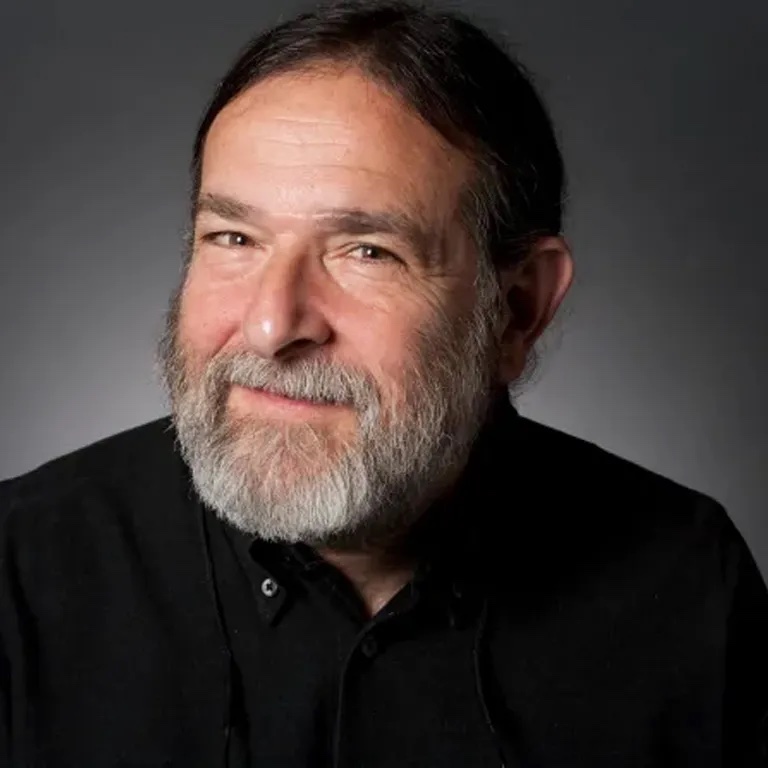
David Himmelstein is a Distinguished Professor of Public Health at Hunter College in New York City. He is known for his widely cited studies on patients’ rights issues and structural problems within the US healthcare system. His 1984 study on patient dumping led to the passage of the Emergency Medical Treatment and Labor Act, a landmark piece of legislation that prevents patients from being “dumped” from hospital emergency rooms for being unable to pay. He has also been a longtime advocate for single-payer healthcare in the United States, and co-founded Physicians for a National Health Program, an organization dedicated to this cause.
Rishabh Rao: I want to start with a major focus of your academic career, patient dumping. Could you explain what patient dumping was and why it was such a big problem?
David Himmelstein: Patient dumping was hospitals’ refusal to care for patients who were emergently ill and sending them or telling them to go to other places, even if they were in potential mortal danger from delay in their care. That was quite common then, because people who were uninsured or with Medicaid would bring either low or no payment for the hospital. The hospitals basically said if we’re not getting paid, we’re not going to care for people.
RR: How did it feel to get the Emergency Medical Treatment and Labor Act (EMTALA) passed at the time? Was it a major success, and how do you view it now?
DH: Well, it was a major but very partial success. It says if someone is in imminent danger of losing their life or in active labor, a hospital can’t refuse to care for them. First of all, that’s sometimes still violated today. We hear reports of people in those circumstances who are refused care. Second, after the hospitals care for those people, if they do adhere to the law, they generally send them a giant bill, which leaves them in financial distress. Third, it doesn’t apply to people who are not in imminent danger of death or in active labor. For instance, I know of a patient who went to a hospital emergency room because she was having pain in her eyes, and they said, “You have acute glaucoma, which is a sight-threatening illness, but you can’t pay, so we’re not going to care for you,” and gave her the addresses of some clinics that she could go to. By the time she got there, she was blind. While people who are about to die aren’t refused care, there are many other circumstances in which people still are refused really vital care that they need.
RR: One major criticism of EMTALA was that since emergency rooms must now stabilize everyone who walks in before letting them go, it can lead to chronic overcrowdedness at emergency rooms, decreasing overall system efficiency. How do you respond to that?
DH: Well, we have a crazy healthcare system. So the only place people have the complete right to healthcare is in the emergency room, and once you say that, it has repercussions which are not all desirable. We ought to have a much broader right to healthcare in every setting in our healthcare system, and that would solve that problem. The problem is in trying to solve these issues in a piecemeal, partial way rather than a thoroughgoing, full way.
The other thing is there’s no particular reason why emergency departments should be congested and overcrowded. It’s just that the hospital executives who make decisions about where to invest don’t want patients who come in through the emergency department. Those are unprofitable patients, so they underinvest in the emergency department. Every hospital CEO knows how long a wait is in their emergency department, how overcrowded it is. It would be a simple matter to say, “Let’s address that—let’s invest the appropriate resources.” But those are money-losing patients. So that’s part of the broader problem that our healthcare system is run for money.
RR: Can you expand on what you see as the major issue with how our healthcare system is run overall, and what changes you propose?
DH: Well, the overriding issue in our healthcare system is whether it’s a venue principally driven by money-making or a venue principally driven by serving people’s needs. We’ve moved radically in the direction of saying we will do what’s profitable and avoid what’s unprofitable. That is increasingly true with the invasion of financial firms that have no experience in or interest in healthcare owning a larger and larger share of our health delivery system. Their avowed purpose of owning it is to make money: They’ll do anything that makes money and nothing that doesn’t make money.
The overriding question for our healthcare system is whether it’s a healthcare system for patients or for profit. I think the American people will clearly reject—and have clearly rejected—the healthcare system we have. The reason it’s unaffordable is because it’s organized to extract vast profits and to put commercial incentives at the center. The real question is whether in the United States what the vast majority of people want can actually be implemented.
RR: I want to talk about this right to healthcare and your views on that, especially as a co-founder of the Physicians for a National Health Program, which is an organization advocating for a single-payer health system in the United States. Can you explain how you got involved in this movement?
DH: What led us to start Physicians for National Health Program was the kind of problems we were seeing in the emergency departments and elsewhere throughout our healthcare system. On the one hand, patients couldn’t get the care they needed, but on the other hand, we had ample healthcare resources in this country. We were seeing, back then and still today, an oversupply and overuse of many kinds of care that actually often makes patients worse, not better.
So, we had severe underuse and overuse side-by-side, both motivated by financial and commercial imperatives. When we looked around, those things were largely absent in much of the rest of the world. We thought, gee, there’s a simple solution for this, which most of the most wealthy countries at least have taken up in one form or another: some form of national health insurance. We put together a proposal for a national health insurance program that was pretty closely modeled on what Canada was doing at that point because before Canada implemented its program, its healthcare system was almost identical to the United States, and the style of medical practice is very similar in the two countries.
It’s easy to imagine a transition to a Canadian-style national health insurance system from what we have. That was really the foundation of this system. We had also done some studies showing that Canada’s system saved vast amounts on the administrative apparatus that enforced inequality and extracted profits in their healthcare system. They also showed that if you just got rid of the need to enforce inequality and extract profit out of the healthcare system, you could save so much that you could cover everyone without increasing healthcare costs.
RR: When we hear about single-payer healthcare systems in the news, something that’s brought up a lot is a Medicare for All-type bill. Is this your vision for a single-payer system, a version of Medicare for everybody, not just older adults?
DH: It’s actually quite a thoroughly revised Medicare system. We actually wrote what eventually became a so-called “Medicare for All” bill, but I personally dislike the term. I think it’s politically wise, but it’s policy problematic. The way Medicare pays is quite problematic. Yes, we want Medicare in the sense that people would be automatically covered the way virtually all people over the age of 65 are covered, and with a wide choice of doctors and hospitals the way Medicare does, but the payment system we envisioned and still envision is quite different from the way Medicare currently operates.
RR: Can you talk through some of those differences?
DH: There are a couple of things. One is that Medicare pays hospitals on a per-patient basis. We proposed and still believe in what’s called ‘global budgeting.’ We think hospitals ought to be paid the way a fire department is paid in this country. There’s no need to to attribute costs and charges to individual patients, and a lot of administrative complexity and inequality arises from that. We said hospitals ought to be paid a lump-sum budget that covers all of their operations for the year, and if they have anything left over, they shouldn’t be allowed to keep it. Again, if a fire department doesn’t spend its budget, it doesn’t keep the extra in order to upgrade its facilities and pay its executives more. That’s one key thing.
The second is that at this point, a lot of the Medicare program is subcontracted to private insurers under the so-called Medicare Advantage plan, and we’d have no role for private insurers in what we envision. The third is that Medicare doesn’t cover a lot of what even seniors need. There are large substantial copayments and deductibles in Medicare, and we don’t think those things should be part of a national health insurance program. Medicare, for instance, doesn’t cover dental care and most long-term care. All of those things really are quite different in what we envision than the Medicare program today.
RR: You’ve been involved with Physicians for a National Health Program for decades: How do you think the political response to a Medicare for All initiative or a single-payer health system has changed over time? Do you think it’s becoming more plausible for the near future, or has the response become more hostile to this?
DH: Both. The profits being made in the healthcare system have continued to grow, so the opposition has become more powerful, because national health insurance would essentially say this is not a field for profit-making. The insurance industry has grown enormously; the for-profit healthcare delivery system has grown enormously, and the nonprofits act more and more like for-profit wannabes with executives who want to protect, you know, some of them making five, six, seven, 10 million dollars a year. That, in our view, shouldn’t be part of what we pay for in our healthcare system. So, there’s a lot of opposition.
On the other hand, I think there’s wider and wider recognition, certainly in the policy community, that there are no viable alternatives that can make our healthcare system work. If you ask in polls, what do Americans want, something like 60 percent say that national health insurance of the kind we’ve proposed is what they’d want. You know, in this political moment, it’s hard to see the imminent threat. Certainly Bernie Sanders has made tremendous contributions to advocacy for what he calls “Medicare for All” and making it popular. In his day, Jesse Jackson did as well. I don’t think there is a champion within the mainstream of the Democratic Party other than Bernie prepared to make this a central issue at this moment. I suspect we’ll need to have a major rallying point. On the other hand, you know, if there’s anything that President Donald Trump has taught us is that you can make radical changes in this country.
RR: That’s a perfect segue because I wanted to start talking about some of those radical changes, especially through the Make America Healthy Again movement, stylized after Make America Great Again, spearheaded by current Health and Human Services Secretary Robert F. Kennedy Jr. This, among many things, emphasizes skepticism of vaccines and other pharmaceuticals. From a physician’s perspective, how do you think this will impact patient trust in the healthcare system?
DH: Well, patients have had and have very good reason to mistrust the healthcare system, and I think that’s why the Make America Healthy Again movement has had traction. This is just as President Trump exploited the real oppression that a very broad segment of the population was feeling to make political gains, and then made things worse. I think the Make America Healthy Again movement exploits the real, and well-founded mistrust of the healthcare system, and takes that in a direction which will—and has—made things much worse. Vaccines are one of the best parts of our healthcare system, and the administration has not just sowed mistrust but now clearly made our population vulnerable to a variety of serious illnesses that they were previously protected against. So they’re killing people, let’s just be frank. They’re exploiting the real problems that people have to make them do crazy things.
In addition, the pieces of the MAHA movement that had a grain of truth, like the rejection of ultra-processed foods, they’ve really done nothing to advance. So the potentially positive parts of their agenda have remained completely unfulfilled while the most negative parts are what they’ve moved on. Meanwhile, my colleagues and I just published this week in the New England Journal of Medicine a summary of the administration’s actions on environmental and occupational health, which are going to be disastrous. I mean, probably the most important medical intervention or health intervention of the last half century is the Clean Air Act. Estimates are that we’ve been saving 200,000 lives a year because of the cleanups of the air from the Clean Air Act. That that’s not just under assault: That’s being reversed. So there are going to be many tens of thousands of deaths from the dirtying of the environment, from ending protections, from polluting the waters, and stopping the protections of workers in workplaces. So the MAHA movement is quackery that builds off real dissatisfaction.
RR: Another aspect of that movement was upending public health infrastructure like the Center for Disease Control and Prevention (CDC) and the National Institutes of Health. How have these changes impacted public health administration, from your perspective?
DH: Public health funding has been a disaster. Basically, local and state public health agencies largely run on year-to-year or two-year to two-year kind of grants. That’s like saying the military is going to depend on applying for a grant to pay the soldiers, and if the grant doesn’t come through, they have to lay off the soldiers. Public health agencies depend on applying for a grant from the CDC in order to employ people to do work that we know needs to be done in every community. For example, if we’re going to track down who’s been exposed to tuberculosis, we know we need people to do that. Why are we having to say that you have to have a grant that you apply for to fund those people to do that next year? The way we funded public health has long been ridiculous, and again, they’re just making it much worse.
RR: That concludes our interview. Thank you for your time.
*This interview was edited for length and clarity.