The BPR High School Program invites student writers to research, draft, and edit a college-level opinion article over the course of a semester. Lillian Sousa is a senior at Cumberland High School in Providence, RI.
The Geheime Staatspolizei, or the “Gestapo,” is infamous for their extreme enforcement tactics: social isolation, abduction, and fear-mongering in the streets of Nazi Germany. The Komitet Gosudarstvennoi Bezopanosti (KGB) is widely reviled for kidnapping, torturing, and starving dissidents in Soviet Russia. The “Islamic State of Iraq and Syria” (ISIS) perpetuated extreme corporal punishments on citizens who disobeyed its administration. Throughout history, we have searched for the line between order and abuse. Policing is inherently forceful, but when does it become abusive? These questions are critical to protecting civil liberties and preventing the normalization of executive control.
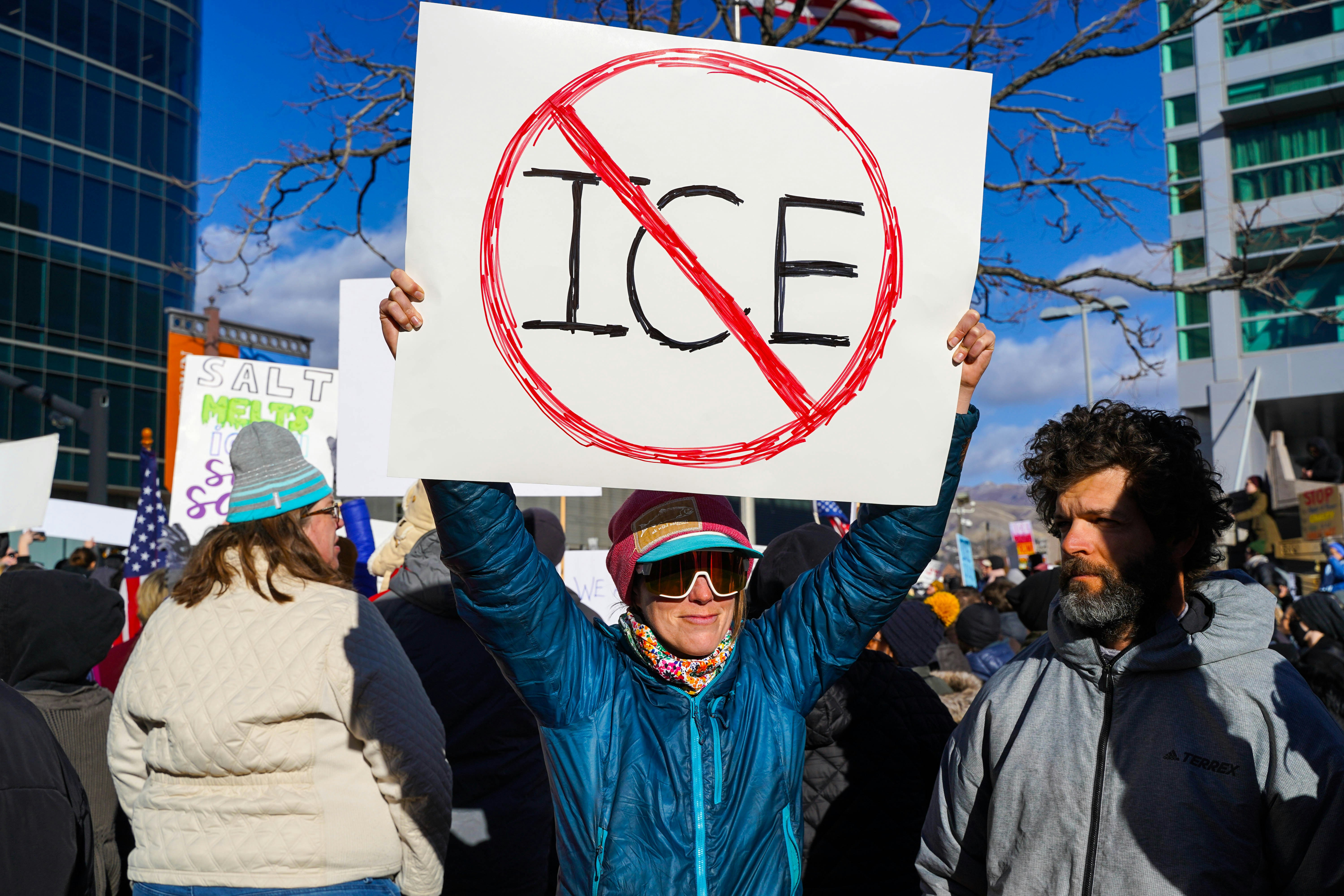
In some cases, the answer is clear. Others, including the US Immigration and Customs Enforcement Agency (ICE), are much tougher to decipher. ICE is tasked with implementing federal immigration, customs, and trade laws. Although the agency does not perpetrate nearly the same level of violence on American streets as the most notorious historical examples of policing, ICE is—to some extent—gaining notoriety on both sides of the aisle for its excessive use of force. Americans’ anxieties about ICE enforcement techniques are an example of a phenomenon that Democrats, Republicans, and everyone in between should agree is frightening: the quiet degradation of police accountability that occurs when the power to enforce rests mostly in the hands of a few. ICE’s enforcement techniques are increasingly representative of police abuse rather than protecting immigration laws.
In FY 2015, ICE’s budget was slightly under $6 billion. Today, that budget has skyrocketed, with the agency receiving $85 billion in federal funding from Congress. The ‘Big Beautiful Bill’ dramatically increased funding for ICE initiatives and furthered President Trump’s agenda of deporting one million “aliens” annually. In pursuit of this goal, ICE has embraced extreme enforcement tactics, and Democrats and Republicans alike have criticized ICE’s treatment of US citizens and undocumented immigrants. However, despite outcries from both sides of the aisle, Congress and the Judiciary are struggling to hold ICE accountable. That accountability, it seems, can only come from the executive branch.
Rather than making efforts to hold ICE accountable, Congress is even digging deeper into its purse to fund ICE expansion. In early 2026, Congress passed the 2026 Homeland Security Appropriations Bills, further allocating funds toward ICE for detention centers, immigration policing, and surveillance. With an increased budget, the Department of Homeland Security (DHS) has even more power to expand anti-immigration procedures. With little limiting their power, ICE officials appear on our streets and profile innocent American citizens; with an increased budget, ICE activity will continue to spread.
The judicial branch is also struggling to rein in ICE’s atrocities. The United States has in place a (theoretically independent) judicial system, where judges interpret laws, decide trials, and administer justice. However, the sidelining of the judicial warrant, a cornerstone of police accountability to the judiciary, in favor of the administrative warrant, leaves ICE largely unaccountable to the judiciary. Under administrative warrants, ICE can perform searches and seizures without the judiciary’s stamp of approval. For example, PBS reports that “a US citizen says ICE forced open the door to his Minnesota home and removed him in his underwear after a warrantless search.”
The courts have attempted to interfere. In fact, many judges have requested the release of American citizens being held in detention centers. But the Trump administration has displayed no urgency to fulfill these requests, and in many instances ignored them entirely. This infuriated judges from across the political spectrum—even those who once sided with the administration’s immigration policies. The DHS is isolating itself from constitutionally established checks and balances and is further distancing its agenda from what America stands for.
While the legislature and judiciary fail to check ICE’s power, the executive is moving full steam ahead. Donald Trump is responsible for writing various executive orders encouraging the actions of ICE policing and the DHS. His attitude towards immigrants and immigration is no secret: “These aren’t people, these are animals.” In his first presidential campaign, Trump famously claimed that the immigrants flowing into our country are “drug lords, […] gang members, and […] some people that are fine.” Trump—through his words and actions—both dehumanizes and disrespects those seeking the American Dream.
With the legislature and judiciary sidelined, ICE accountability rests in the hands of the president. When Trump fired former Homeland Security Secretary Kristi Noem in March of 2026, he did so to protect his own image—not to protect American citizens and the rule of law. Noem was considered a “liability” because of previous controversies—including a multi-million dollar ad campaign. Her firing implies that Trump is willing to hold the DHS accountable only to protect his and DHS’s branding. Evidently, loyalty and promoting the President’s agenda take precedent in the Trump administration over even egregious human rights abuses.
ICE operates under the executive branch, but what happens when our own executive promotes abuses of power instead of combatting them? ICE is operating at historically unmatched levels and spreading with immense frequency; Congress especially needs to take action to limit the executive branch. ICE is targeting American citizens because of their accents and ethnicities. The DHS and executive branches are actively limiting civil rights. Fear is constant, and change seems irreversible. It is critical as an American community to acknowledge these problems occurring in plain sight because they will continue to escalate, and ICE accountability may soon be a distant dream.