“Willkommen in Wust! Willkommen in Saxony-Anhalt!” These were the first words I heard following 18 hours of travel as my host parents, Sigrun and Matthias, welcomed me with open arms. Wust, a town of just over 800 residents in old East Germany’s long-forgotten Saxony-Anhalt region, would become my home for the next month. I spent my off-time as an English teacher at a community summer school connecting with locals and running through the rich cornfields that make up Germany’s countryside. The immersive experience of “living off the land” would paint a very different picture of Saxony-Anhalt than I had initially expected.
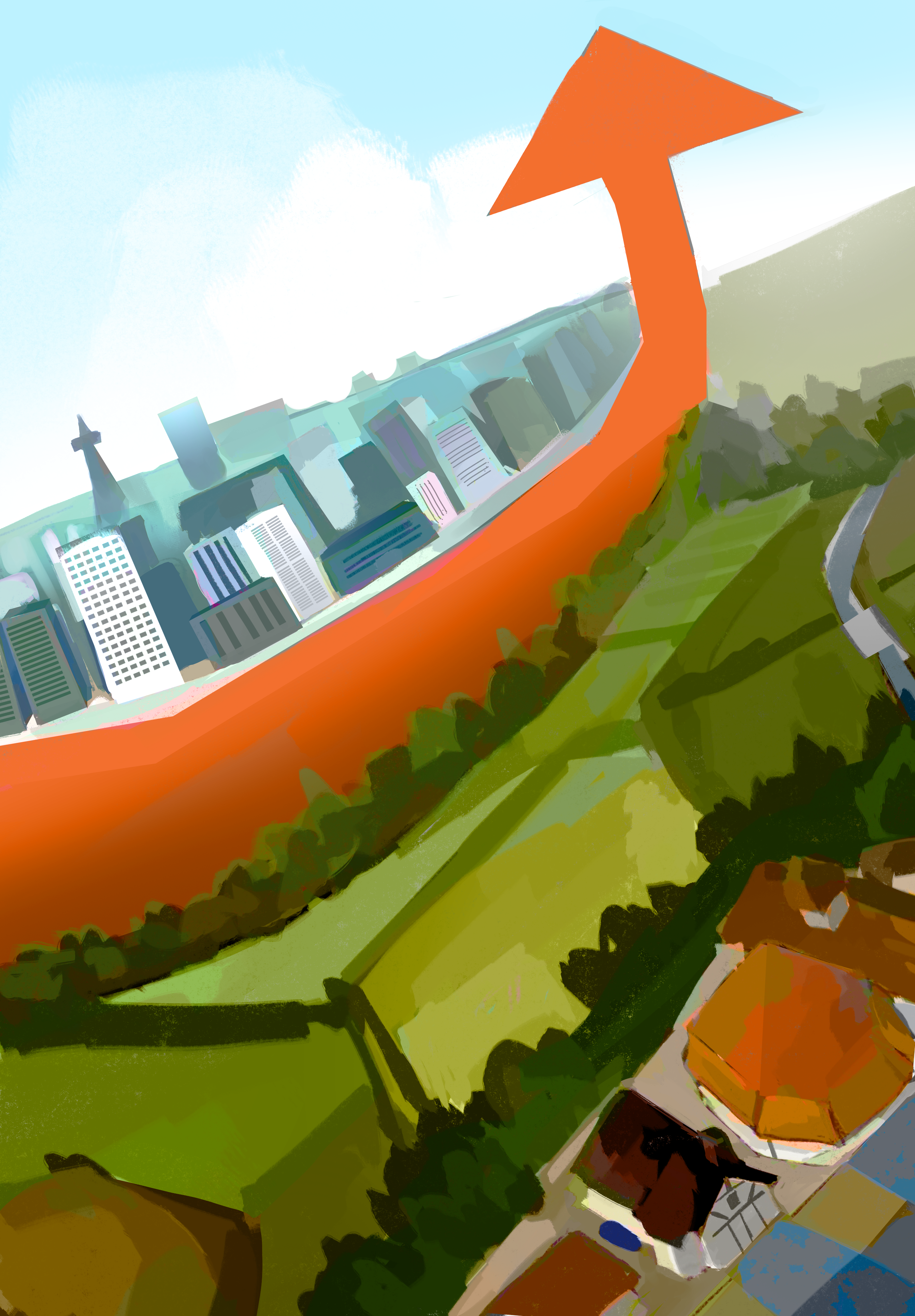
By nearly every socioeconomic measure or statistic, Saxony-Anhalt is Germany’s most underperforming region. Once the pillar of East Germany’s agricultural industry, ailing infrastructure and a strategy of consolidation, as opposed to investment, meant many firms in Saxony-Anhalt struggled to compete with their Western counterparts after reunification in October 1990. These challenges have manifested into modern economic strife; the region’s GDP per capita is the lowest in the country, unemployment remains higher than the national average, and since 1950, more than one-quarter of the population has left the state. Younger, more educated residents flee to Bavaria, Hamburg, or Berlin, seeking better opportunities and improved wages. From a bird’s eye view, the narrative is simple: Saxony-Anhalt has fallen behind.
This is at least the view of many in Germany’s wealthier regions, as the country experiences a divide much like that in the United States between coastal metropolitan areas and more rural areas in the Midwest. In both cases, outsiders tend to dismiss the countryside as economically stagnant, culturally backward, or politically destabilized. It is true that since reunification, the Western states have continued to outperform the East by most economic measures, and the far-right Alternativ für Deutschland (AfD) has seen increasing success in the region. However, as Christian Lindner, leader of Germany’s Free Democratic Party (FDP), points out, it was the people in the East, seeking democracy and a better way of life, who took down the wall in 1989. Such reminders rarely make it into headlines; instead, stereotypes and statistics dominate the national conversation around Saxony-Anhalt, painting it and the surrounding regions as little more than struggling remnants stuck in the past.
But in Wust, the locals and their way of life tell a vastly different story than do the numbers. Moreover, their stories reveal a different set of priorities. For many, the preservation of traditional countryside culture, as well as maintaining a strong sense of community, is far more critical than industrializing or modernizing. If you ask someone from Wust for directions, they will likely reply with “behind the Stimmings’” or “around the corner from Susanna’s”—the town is so tight-knit that family names become landmarks. Beloved traditions, from choir concerts in thousand-year-old churches to marionette puppet shows depicting biblical short stories, help bolster this strong sense of community, and no increase in GDP per capita or improvement in an Human Development Index (HDI) score can account for the weight those in Saxony-Anhalt place on safeguarding this way of life. The constant comparisons to wealthier, more developed areas of the country, combined with demeaning rhetoric from urbanites and those accustomed to a more modern way of life, contribute to a growing sense of resentment from locals in Saxony-Anhalt.
This resentment, while perhaps well-grounded, fuels dangerous political backlash. The AfD, who achieved a resounding victory in the region during 2024 European Parliamentary elections, has a platform built on racism and xenophobia disguised as German pride. Slurs and derogatory remarks against marginalized minority groups are staples in the AfD vocabulary and represent their hatred for those who might challenge their arbitrary definition of what it means to be “ein Deutscher”—a German.
But what if this concept of “German pride” was localized? Much like the traditional AfD message that the German identity is being attacked by outsiders, conversations I had with locals revealed that many of them feel targeted by their fellow Germans. Patronizing headlines, constant negative economic reports, and a sense of elitism from Germans outside the region, who disregard the rituals and traditions of the countryside, have left many in Saxony-Anhalt feeling ostracized and attacked. It is this sense of vulnerability that the AfD seeks to capitalize on nationally by fueling nativist sentiment and painting immigration as an existential threat. The fact that those in Saxony-Anhalt feel equally attacked by their fellow citizens opens the door for the aforementioned AfD rhetoric to be successful. It is important to note that while the AfD is the leading political party in the region, it certainly does not represent the opinion of everyone inside Saxony-Anhalt. But even the many locals I encountered who are hypercritical of the AfD can understand why residents in this region might turn to such a solution. If Germans outside the region were more accepting of their fellow citizens, perhaps those in Saxony-Anhalt would in turn be more accepting of outsiders themselves.
Without immersing oneself fully in other communities, understanding who those people are and why they make decisions is nearly impossible. City-folk Germans should spend time in Saxony-Anhalt, not just as tourists but as active cultural participants, to better understand the region’s way of life. The story of Saxony-Anhalt warns against the ways that prejudice takes root. Prosperity cannot be measured purely in numbers; rather, its quantification must also account for the need for belonging and identity that sustains community life.