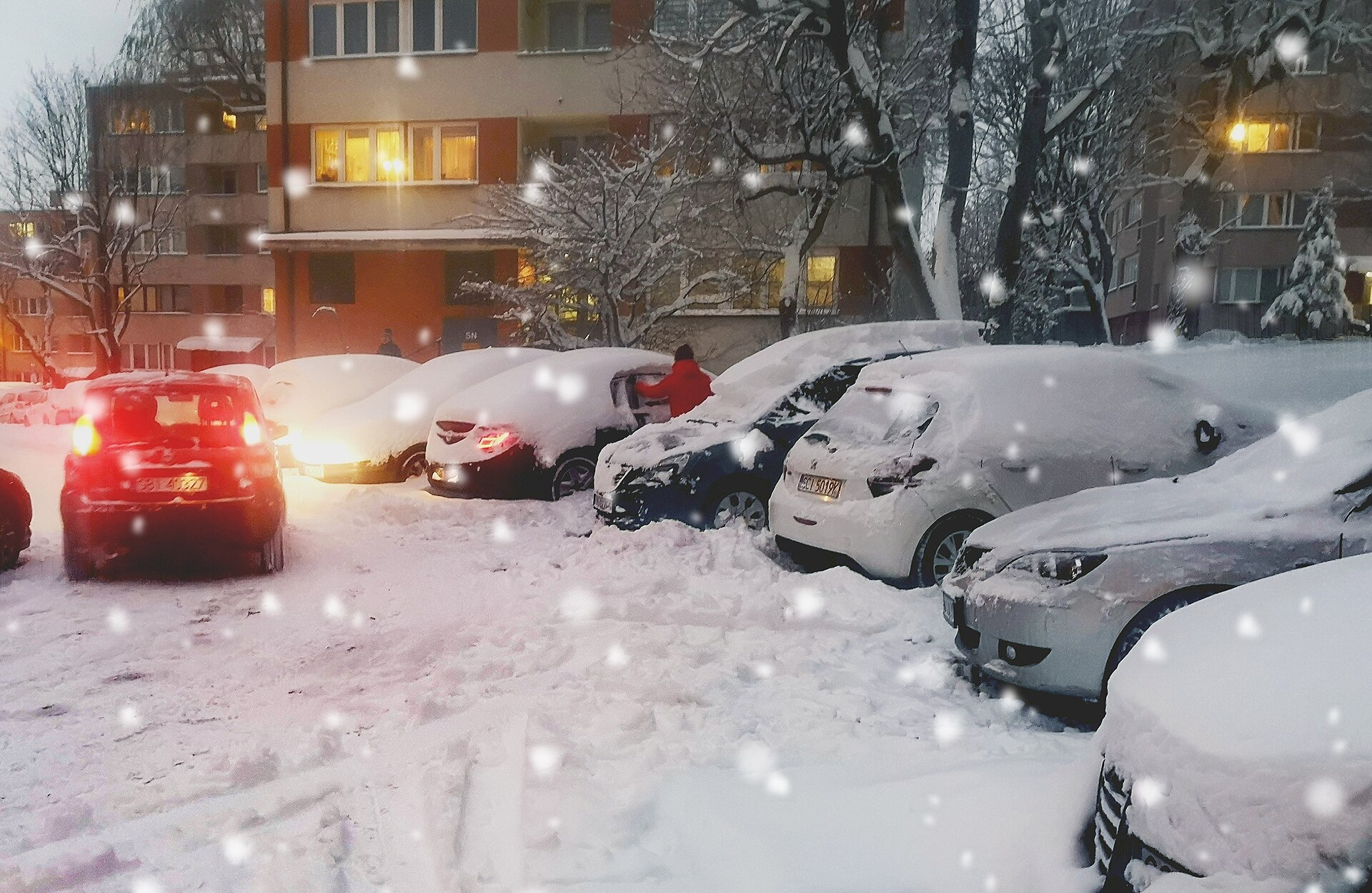
On January 26, 2026, after an unprecedented winter storm left a foot of snow across Providence, residents gleefully went outside to play in the snow, building snowmen, throwing snow, and sledding on hills. It seemed like a perfect day. But unbeknownst to most of them, the next few weeks would be a nightmare: roads reduced to one lane, sidewalks blocked for pedestrians completely, and snow plowing heavily delayed and unpredictable.
These issues have persisted over many weeks, leaving residents frustrated at the city’s utter unpreparedness for the storm. Tensions grew so high that the Providence City Council summoned the leadership of the Department of Public Works to demand answers on how they prepared for the snowstorm.
According to Providence’s 2025-2026 fiscal year operating budget, the funds allocated for storm response total $2,178,500. Most of the funds are specifically earmarked for supplies—such as snow and ice removal, equipment repairs, and rentals—adding up to $1,528,500. Providence stated that over 80 city personnel and 30 private contractors had worked constantly on the snow response in the weeks following the storm. Although storm response budgets vary across and even within states depending on the storm’s location and intensity, Providence’s 2026 budget is on par with New England cities with similar populations such as Concord, New Hampshire and Springfield, Massachusetts, whose budgets are $1,920,849 and $1,591,250, respectively. Essentially, Providence has the funds, the resources, and the workforce to remove snow quickly and effectively–yet its performance is remarkably poor in comparison to other cities with similar weather conditions.
The snow removal funds of Meriden, a city of about 60,000 in central Connecticut, are much lower than Providence’s, only amounting to around $500,000. This past winter, their snow response team consisted of only 20 city personnel. Despite having significantly fewer resources to work with, Meriden won the American Public Works Association’s (APWA) 2025 Excellence in Snow and Ice Control Award, a highly selective nationwide award granted by the APWA’s over 30,000 members worldwide.
So what sets apart the city’s storm response? Meriden tracks the amount of salt and sand it needs, the number of hours its personnel are working, and equipment maintenance. The city also rehearses routes personnel will be going through, trains personnel in a direct approach, and communicates clearly with its residents on what the snow response team is doing and what they should be doing as well. In several videos, Meriden Public Works can be seen clearing critical intersections, with several roads looking completely clear. The City of Meriden has also made parking expectations clear, announcing parking bans and clarifying where parking is permitted during parking bans. This has proven efficient, seeing as the Meriden Public Works Department said they were able to clear snow off with the help of residents staying off the streets with their vehicles. Meriden has earned praise from its own residents for effective response and communication, some posting pictures of the impressive snow job.
Providence, on the other hand, has not exhibited anywhere near the same level of planning and coordination. The confusion on whose responsibility it is to shovel snow in certain areas has led to sidewalks not being cleared for days and trash piling up, much to the inconvenience of pedestrians. In addition, Providence holds homeowners and businesses responsible for shoveling snow off the sidewalks in front of them–but poor enforcement means that, despite a possible fine from $25 to up to $500 for not clearing snow and ice, sidewalks are often inaccessible in front of homes and businesses. In Meriden, effective enforcement (through fines and towing) is a critical component of the response plan.
It could be argued that Meriden’s success is partially a consequence of a smaller population–the city has roughly 60,000 residents to take care of (compared to Providence’s 190,000)–but throughout the US, large cities like Minneapolis (with nearly 430,000 residents) still implement more effective responses than Providence. Minneapolis lays out expectations on what residents can expect from the snow removal response team on their website and specifies the usual order of events the response team goes through, how much is expected to be plowed, and what factors are considered before declaring a snow emergency. Nowhere on Providence’s snow response page does it mention any of these items. The website also lays out expectations on what specific streets are going to be plowed and when, and what specific side of the street is going to be cleared, to let residents know when to move their cars and when to expect roads and sidewalks to be clear. There is even a video explaining the parking rules, and all information is presented in multiple languages. Minneapolis also strictly enforces parking rules. In the past, the city has been known to effectively give out tickets and tow cars, with their website claiming they remove an average of 1,500 cars per snow emergency.
If cities like Minneapolis and Meriden can do it, then so can Providence. What Providence lacks is a defined snow removal plan to identify which streets require priority, communicate when residents can expect personnel in a certain area, and more. The city must make residents aware of what it plans to do and what it expects from them, while also strictly enforcing penalties if residents fail to meet those expectations.
In the face of advancing climate change, we can expect snowstorms to become more frequent and more severe. The snowstorm on January 26 was an early warning to Providence. The February 24 snowstorm, which brought a record-breaking 37.9 inches of snow, is yet another. If there was ever a time for Providence to create and implement effective snow removal plans and improve communication with residents, it is now. Snow removal cannot be left to chance. If Providence does not develop a strategy for the future, the city will find itself buried in deep snow.