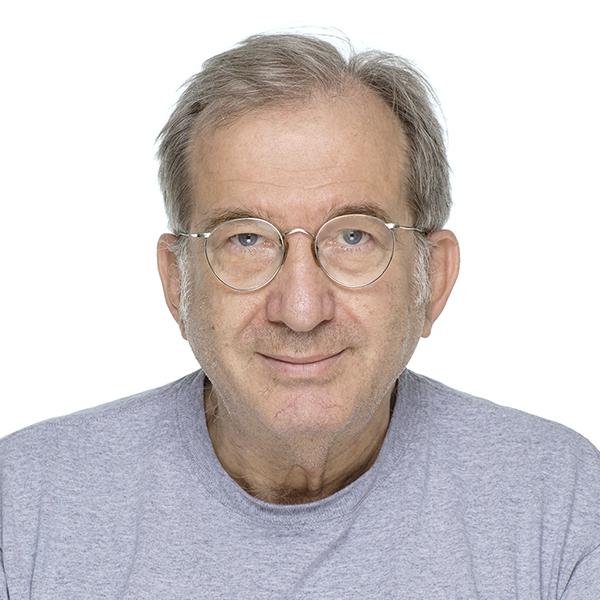
Professor Petros C. Mavroidis is Edwin B. Parker Professor of Foreign and Comparative Law at Columbia Law School. He is a distinguished academic and faculty member, having written award-winning titles like The Regulation of International Trade. Previously, he served as a member of the World Trade Organization (WTO) legal affairs division from 1992 to 1995, before becoming a legal adviser to the WTO in 1996.
Zern Hee Chua: Regarding the recent Trump-Xi summit in October, there have been diverse perspectives. For instance, some have argued that the lifting of trade restrictions and tariff reductions should be celebrated, while others have countered that the summit is a reflection of how Trump’s trade policies have strengthened China’s export control regime. What are your thoughts about the summit?
Petros Mavroidis: None of the two, to tell you the truth. To me, there is another issue that deserves more of our attention: that the summit is a bilateral discussion outside the World Trade Organization (WTO), rather than a multilateral one within the WTO, which is the only context where we can have trade certainty about what is happening. Why so? Well, this is because there are certain rules that one has to follow within the WTO, such as the most-favored-nation (MFN) clause. How can we be sure that President Trump and Chairman Xi do not deviate from MFN when they meet behind closed doors? Trump, for instance, can always pursue an anti-WTO trade policy, like he had done during his first term. Now, who wins and who loses? I think it’s difficult to say if there is a winner. As for the loser, it is definitely the multilateral trading system. Moreover, we could also see China’s leverage on the United States. President Trump, despite his bravado and tariffs, asked Chairman Xi for a meeting when China threatened the United States with export restrictions on rare earths; the Chinese export restrictions had quite an effect on the United States.
ZHC: How, then, can we overcome this lack of transparency?
PM: I wrote a book for the Princeton University Press with André Sapir, who used to be the chief economist of the EU; the book was China and the WTO: Why Multilateralism Still Matters. We made two points in this book. First, we wrote, we, I mean the West, wrote the rules of the game from which now the United States walks away. China did not write the WTO contract. China was outside the WTO; it was a rules-taker. Secondly, we said countries who find issues on trade with China have to respond to two questions. One, how much of this can one deal with within the WTO? And if not, where can one deal with those issues? I see no discussion about those things. Countries have pursued negotiations outside the WTO, which are non-transparent. It can be observed that the discussed agreements violate WTO principles, such as the MFN clause. This means that countries have been subject to the whims of trade partners. Given such developments, I’m not that optimistic about resolving the lack of transparency, honestly.
ZHC: In an analytical article that was published earlier this year, you argued that in the implementation of his reciprocal tariffs, “Trump’s understanding of ‘reciprocity’ runs counter to the use of ‘reciprocity’ in any sense of the word, including [that in] the creation of the international trading system.” Could you elaborate on that?
PM: That article was written for Bruegel, which is a think tank in Brussels that I’m affiliated with. And what I meant was this. In 1995, we finished the Uruguay Round. Now, these agreements represent a reciprocal commitment between the various members. The United States, specifically, stood to gain a lot from the trade agreements on services and intellectual property rights. Now, Trump comes along and decries the lack of reciprocity. How does that make sense? Even if we were to assume that his claims on the lack of reciprocity is justified, it is actually the United States that is disproportionately advantaged. In other words, the agreements are totally lopsided, with many other parties receiving close to nothing. Besides, Trump’s leveraging of tariff hikes to attain further benefits, such as non-MFN access to foreign markets, are honestly extortionary, which is ironic given his calls for greater reciprocity.
ZHC: One of the main challenges facing the WTO today is that diverse types of economies, with different developmental priorities, are trying to trade with one another “fairly.” For example, several emerging or developing economies have advocated for the right to maintain their agricultural and fishing subsidies. How have you advised the WTO in this regard?
PM: In my opinion, I never understood what “fair” means. In a way, provisions like antidumping agreements are “fair,” but they make zero economic sense and, quite frankly, protect no one. Moreover, if it had really been that fair, why have we not punished price discrimination like how we have dealt with dumping in international trade? In other words, we would have applied anti-dumping regulations to the domestic domain. But we don’t do that. Instead, we use competition law, where we have injury to competition, not injury to competitors. Having said this, I’m the first to say that the WTO and its predecessor—the [General Agreement on Tariffs and Trade] GATT—have been managed poorly.
More generally, we now know that the original idea of trade preferences didn’t make much sense. It was based on the wrong assumptions. There is, however, some improvement now with the signing of the Trade Facilitation Agreement; beneficiaries participate in the discussion on where these trade preferences would be introduced. In the past, only donors could decide, which is totally crazy.
As for the topic on the right to maintain subsidies being fair, I would say it’s more a question of whether the subsidies agreement makes sense in the first place. The subsidies agreement does not make much sense because it lumps all subsidies in one box, saying that all subsidies are bad, either actionable or illegal. This doesn’t make sense. Research and development (R&D) subsidies from the state are needed because R&D leads to knowledge spillovers and thus the free-rider problem when left to free-market forces, but they are declared illegal. Now, this has been somewhat corrected with the relaxation of restrictions on fishery subsidies, but there is another problem: ineffective policing. As for the agreement on restricting agricultural subsidies, I never understood it. As long as the resultant agricultural stockpiling holding does not lead to dumping into world markets, why should we be that concerned about it?
ZHC: There have been critiques that the WTO’s waning effectiveness over the last two decades primarily stem from its own design flaws, such as weakness in the enforcement of binding verdicts and, more recently, the paralysis of the Appellate Body in 2019. In your opinion, to what extent are institutional inadequacies the primary reason for the WTO’s declining effectiveness?
PM: I’d say that institutional inadequacies would definitely be the proximate reason but not the ultimate reason. The WTO has three principal functions; to legislate, to police and enforce transparency, and to adjudicate. In 2001, Claude Barfield, a political scientist at the American Enterprise Institute, argued in his book, Free Trade, Sovereignty, Democracy, that an institutional disequilibrium surfaces when the institution enjoys a strong adjudicative function but suffers from a weak legislative function. The WTO, by mandating third-party adjudication, does enjoy a strong adjudicative function. However, the WTO suffers from weak legislation because it is highly heterogeneous; agreements and concessions are needed from 166 members, presently. You cannot expect states in sub-Saharan Africa to have the same level of environmental protection as developed countries; they have other, more pressing matters to solve! What follows is two things. Firstly, given strong adjudication and weak legislation, states are incentivized to take the wrong cases to adjudication. The WTO, instead of taking a step back when they had very sensitive cases, adjudicated on everything as per their mandate, which led to unenviable outcomes. Secondly, there have been more plurilateral agreements, shifting the legislative agenda towards such agreements.
ZHC: Moving forward, what are your thoughts on how international trade and trade laws would evolve over the next decade or two?
PM: Honestly, I can tell you a little bit about what I think, but it’s very difficult to make predictions. I personally hope that the WTO remains in place, as it facilitates international communication necessary for peaceful cohabitation and the reaping of gains from trade liberalization. Furthermore, I would like to see variable geometry within the WTO, with not only trade agreements that allow countries more flexibility and autonomy but also openness to membership at all times.
Would this be possible? In one of the best papers I have read in the last three years—Equilibrium Trade Regimes: Power vs. Rules-Based by Cecilia Carvalho, Daniel Monte, and Emanuel Ornelas—the authors argue that without an obvious hegemon, the “three big players”— China, the EU, and the United States—would rather free ride on another’s willingness to assume the necessary cost of improving the WTO. Moreover, the Biden administration did not do much to undo the first Trump administration’s trade policy. The United States had been nicer to Europe and Canada, true, but the initiative to bring the WTO back into relevance remained lacking.
*This interview has been edited for length and clarity.