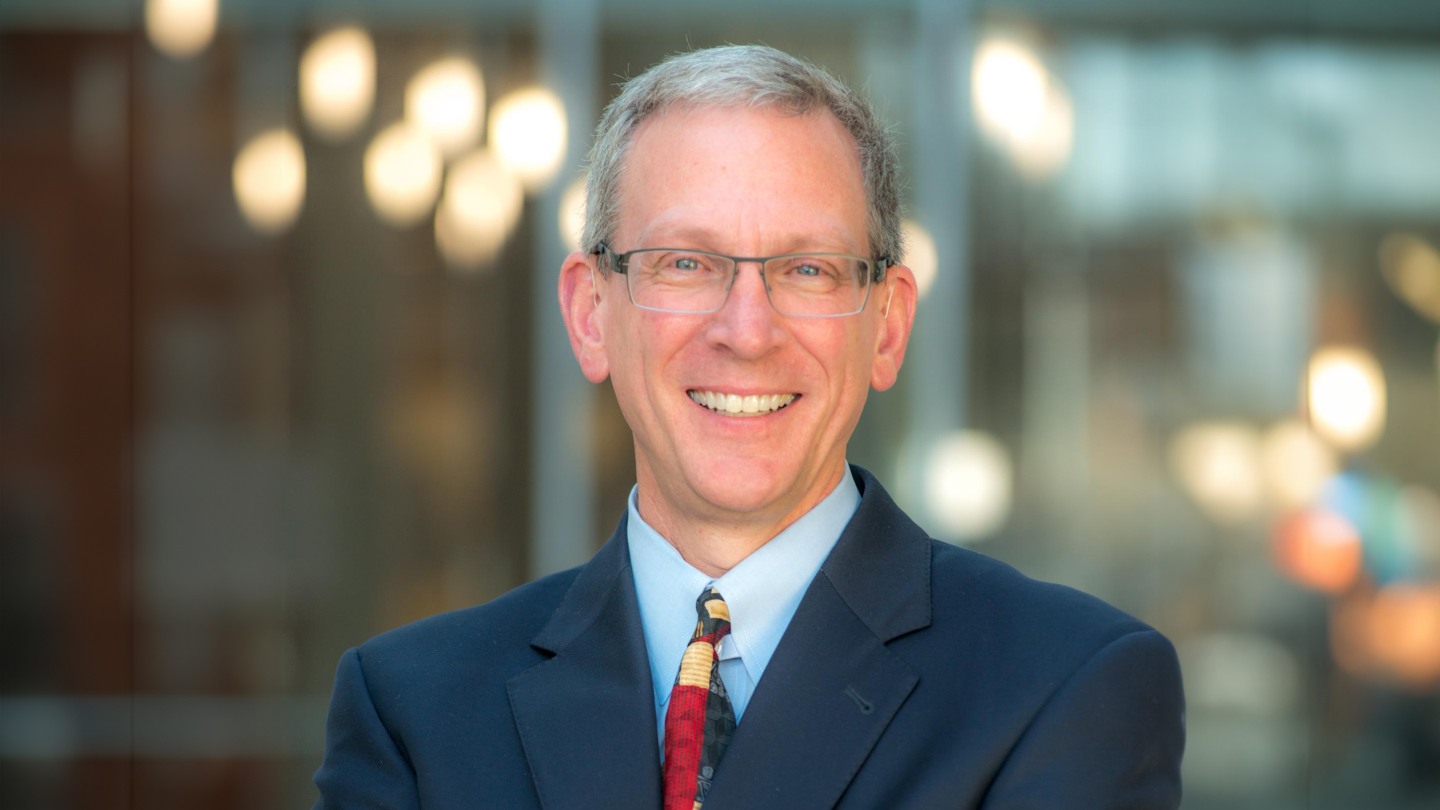
Dr. Ira Wilson, MD, MSc is a primary care physician, Associate Provost for Academic Space, and current professor in and former chair of the Department of Health Services, Policy and Practice at Brown University’s School of Public Health. He has conducted influential research on the structural features of health systems, physician-patient interactions, and the quality of medication prescribing, adherence, and management. He has also served in leadership and advisory roles to numerous public health and research organizations across the country, including the Providence/Boston Center for AIDS Research, the Behavioral Science Advisory Group for NIH-funded HIV research, the National Board of the HIV Medicine Association, and Governor Gina Raimondo’s Working Group to Reinvent Medicaid in Rhode Island.
Rishabh Rao: You’ve been a primary care physician for decades. What are some of the most important lessons you’ve learned about the state of primary care in this country?
Ira Wilson: Well, I think this is not terribly controversial. But, a system that prioritizes primary care is going to really benefit everybody. This is really important for people to understand: It’s not that specialty care isn’t important. That’s not true at all. Specialty care is essential. It’s part of a system. But the question is a matter of proportion and a matter of emphasis. I think everybody agrees that a system which is primary care-focused and primary care-driven is likely to provide better aggregate benefits for a society than the one that we have. And policies at every level of the system all the way from training, up through how we pay physicians, to how we pay physicians’ team members all contribute to really serious shortages.
A second thing would be that primary care requires a lot of teamwork and a lot of coordination, whereas specialty care might require procedures and inpatient visits, but not a lot of behind-the-scenes stuff. To do primary care, to coordinate, and to connect requires a lot of effort that can’t be paid for by a fee-for-service system where you bill by the visit. The system has to allow for all of that coordination and all that teamwork to be paid for so it can happen.
Also, our whole care system is really provider-driven. What do I mean by that? Well, I don’t just mean that it’s providers who control things, but that things are done at the convenience of providers. This affects things like how difficult it is to see a doctor, for example. So the whole system is really focused not on the consumer, the way many other parts of our economy are, but on the provider.
Finally, I will say that disparities in access to care, in processes of care, and particularly in outcomes of care—at one level, yes, they’re morally repugnant. But they’re also really expensive and inefficient. If you are not providing equal quality of care to people, then those who aren’t getting that care are going to be less productive. They aren’t going to be able to perform the roles that they provide in society, whether those roles are being a minister, coach, parent, or grandparent. Disparities are not only unfortunate and morally repugnant, they are also very, very expensive.
RR: So disparities in access to care radiate into other parts of life, especially the economy. Is that what you’re saying?
IW: Yeah, absolutely. To the extent that there are categories of people defined perhaps by income, perhaps by race, perhaps by ethnicity, perhaps by gender identity, who aren’t getting care that they need and therefore either in the short term or in the intermediate and long term can’t do what they need to do in their lives, that’s expensive for our society because they are not participating, tax-paying, engaged members, not only of our economy, but of all the informal things that human beings do, as part of life. People don’t think about that as expensive, but it is very expensive because this vital resource is laying fallow because it’s not healthy.
RR: You alluded to the necessity of alternatives to fee-for-service models, like value-based models, and you brought up the US physician shortage, especially for primary care. There are definite steps that need to be taken to address these types of challenges. Would you say those steps need to come from the government in things like changes to Medicare and Medicaid, for example, or would those steps come from the private sector?
IW: Well, that is a huge and complicated topic. I think it’s worth noting a couple things. One is that we live in a capitalist society. And by the way, I’m a capitalist. I believe capitalism is ultimately far from perfect, but far and away the best way that we know of to distribute goods and services in society in a fair and reasonable way, and for that society to progress. But when I say capitalism, I mean fair capitalism. I mean capitalism that is not crony capitalism or monopolistic capitalism or oligopoly or systems that are controlled for extractive purposes, where what people are doing is extracting rents rather than providing services to speak economically.
We think we have a capitalistic system, but we don’t in medicine. We have distinct markets that form our national system. But almost all of those markets have a tremendous consolidation of payers, tremendous consolidation of providers. That puts patients at a huge disadvantage toward trying to get what they need right because when you have consolidation, what you have is one: lack of choice, two: almost inevitably higher prices, and three: almost inevitably lower quality, or at best, equal quality.
The second thing is that about 65 percent of the people in the country are commercially insured. More than 50 percent of the dollars spent on health care are either on commercial insurance or spent by private individuals. Now, there are people who think all you do is just give Medicare to everybody or a Medicare equivalent to everybody. Well, Medicare is way too expensive for older people, and is itself very problematic. However, we can’t just turn this all over to private concerns because we have monopolies. The other reason industry-driven reform can never work is that when you distribute care based on ability to pay rather than based on need for health care, then people who don’t have the ability to demand those services will never get what they need. You have to have some kind of regulatory entity, be it a federal government or be the state government, that’s going to make sure that there is a distribution of medical services that benefits society.
Those are all very big picture concepts, but it is important not to forget these big picture conceptual issues. Anyone who tells you that there is some kind of simple way to cut through the Gordian knot of our healthcare system doesn’t really know anything about it.
RR: I want to pivot to public health as a whole. Since the Covid-19 pandemic, there’s been a growing trend of mistrust in medical care and science. What has it been like to work in this kind of environment as a physician and public health worker?
IW: Well, that’s a very complicated question. And the way to think about it is to step back and say: what is science? What does it try to do? The key to good science is actually doubt and skepticism. The best science is the drive to disprove something until you finally can’t disprove it and it appears to be true. That’s the way that science works best. Now, that is obviously a slow process. I don’t think anyone’s going to argue now that smoking doesn’t contribute to lung cancer, but many scientific principles are debatable. There’s evidence on both sides and reasonable people can and should disagree about what we believe to be true.
So, if you take that mentality and add to it a scientific community that is not the most patient, not the most humble, and really not the best at listening, and then you add COVID, no time to work out anything, no time to discuss uncertainty, no time to be appropriately humble about what we know and what we don’t know, and there’s tremendous pressure to save lives, and then you add social media, 24-hour news cycles, people who can say anything they want, no matter how asinine or ridiculous, you get this toxic soup of a circumstance in which people don’t know what to believe. I do think that we all have to be very humble in science about whether we overplayed our hand. And in some sense, I don’t think we overplayed our hand at all. We did big, huge clinical trials of vaccines. They worked. They had little if no downside and huge upside.
But there’s a lot of other things that we could and should have been a lot more humble about.
I’m going to give you a couple of examples. At the beginning of the pandemic, we thought that COVID was a droplet. It was carried by droplets and went from person to person by droplets. That’s why we had the six-feet thing. You still hear this: Stay six feet away. Well, if a virus is in an aerosolized form, then it just floats out in the air. Six feet doesn’t matter. It took a long, long time to break through the dogma of respiratory infections being droplet-transmitted. There are all these consequences of playing that wrong.
People like (Dean of the Brown University School of Public Health) Ashish Jha were really out ahead of this. He knew it was aerosolized, so he thought we should open windows and increase circulation and that decreasing the supply of virus was essential and that we had to do it with industrial measures. But we were slow to do a lot of that.
Then there was this business about when kids should go back to school and when it was safe to go back to school. In retrospect, a lot of people think we blew that, we should have sent people back to school right away. That’s right, we probably should have. But people forget what the teachers unions thought about that. Young people who are students really did very well. Even if they got COVID, very few people got seriously sick or died, although not no one, people did die. But who were the teachers they were teaching? Many of them were 40, 50, 60 years old and had chronic conditions. People forget the conversations that were going on about how safe it was for teachers to be teaching in those environments.
There are many examples of things where we, as a scientific community, probably overplayed our hand, where we implied that we knew more than we did. That’s why the biggest lesson that I take away from this is to be humble, to be patient, and to really, really listen hard to the people who we’re trying to serve and help.
RR: What advice would you give to students interested in going to medicine or public health?
IW: Well, there’s a couple things that I have been talking to people about really since before I came to Brown who were interested in a career in medicine and health. Those things really haven’t changed. The most important thing is that each person is a different person. They come from a different background. They have different proclivities. There’s certain different things that make them happy. There’s different problems that animate them, that make them stay up late at night and figure out how to do stuff. The most important thing for people like you and Brown students to do is to be working on something that they really care about. That can change over time.
But the most important thing is to ask the question: Is this something I can see myself caring a lot about, enough to get up every day and do hard work for the next 50 years? Part of what I try to do is help people see that there’s a much broader spectrum of activities that you can engage in: from government, to pharmaceuticals, to public health organizations, to actually providing medical care, to leadership in medicine, to engagement in the insurance industry. There’s a huge variety of things that you can do that fit as long as you want to go to medical school and you want to spend the time and energy, a lot of opportunity costs.
If you do that, there’s all kinds of directions you could go with that kind of training. I dare say that in our society, there always is gonna be a need. Even though our society is changing with AI and so on and so forth, I don’t know what our economy is gonna look like in five, 10, 15 years, but we’re still gonna need healthcare providers. Chances are those healthcare providers are going to be reasonably well reimbursed so that if someone decides they wanna go in that direction, they’re likely going to make a reasonable income.
The other thing is that I think a lot of Brown students care a lot about service. They want their life and their work life as well as their nonwork life to mean something to someone other than themselves. I want to communicate that there is a massive and wonderful opportunity to provide service to others through healthcare. Whether you have an MD or a PhD or you’re a nurse or a physician’s assistant or whatever it is, it’s a much more complicated ecology than most people understand, with more niches that people can get in and have a really valuable career than people might have imagined.
RR: That concludes our interview. Thank you so much.
*This interview has been edited for length and clarity.