Note: This piece was written between October-November 2025. Politics are constantly evolving, and so there may have been multiple developments by the time of publication. Most notably, Andrej Babiš was sworn in as Czechia’s prime minister on December 9., 2025.
A recent investigation by Voxpot, a Czech news website, found that the top 16 Czech disinformation websites publish more content than all the traditional news outlets combined—approximately 120 articles per day. The largest of them, CZ24NEWS, attracts 3 million visits per month, which is no small figure considering that the country’s total population sits around 11 million. Some recent headlines include (translated from Czech) “CONFIRMED! 1.7 MILLION UKRAINIAN SOLDIERS HAVE ALREADY DIED! Ukraine’s debt just reached 100% of GDP and the country is effectively bankrupt!”; “Brussels interfering in the Czech elections? Kateřina Konečná exposes Volt”; and my personal favorite, “Cannibals at the Gates: Dehumanization of Enemies as a Working Tool of the New Totalitarianism. Green Zealots Want Us to Eat Each Other.” But who is behind this disinformation, and why?
The answer is simple: Russia. For one, Protiproud (“Against the Wave”)—the website that published the aforementioned cannibalism article—is allegedly funded by people within Russian President Vladimir Putin’s circle. Voxpot found that approximately 10 percent of published disinformation media are direct translations of pieces published by Russian state-owned and controlled propaganda websites. Of the nearly 21,000 articles citing Russian propaganda sources, over one-third of them cite the state news agency Sputnik. These Russian media platforms have been banned under sanctions since the 2022 invasion of Ukraine. “We’re in a disinformation war,” said Czech Prime Minister Petr Fiala.
Ultimately, the goal of these articles is to disseminate pro-Russian sentiment while trying to ignite mistrust in Western democratic institutions. Some even threaten nuclear war if Ukraine and NATO continue resisting the Russian occupation of Ukrainian territories, fostering public fear for their own safety. The article is published under a category titled “3. World War” and, as of November 21, 2025, includes a poll asking if the Czech Republic is sovereign and independent. The result of the poll was an overwhelming “NO,” standing at 98 percent. Likely, these voters are of the opinion that the Czech Republic is a puppet of the West, despite its status as a parliamentary republic. If this were to be the case, it would demonstrate how effective the disinformation sites have been at influencing the perceptions of their visitors.
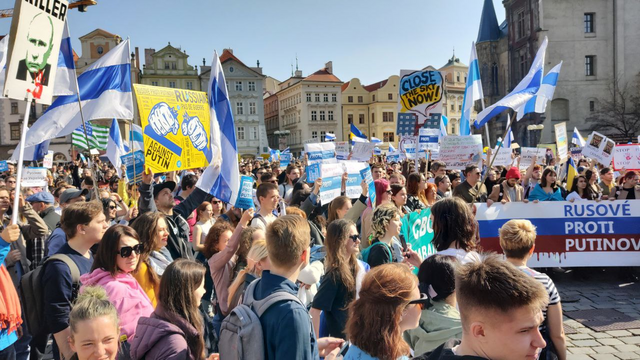
So why the Czech Republic? For one, its position as a relatively young liberal democracy means that the population is always on alert for signs of corruption and suppression of freedom. According to Tomáš Cirhan, a political analyst at Masaryk University in Brno, the government must be very careful not to create the impression of censorship, stating: “Any attempts to close some media outlets or some websites claiming that they are disinformation websites is a very sensitive topic indeed.” The irony lies in the fact that the 40 years of censorship and corruption that the Czech Republic endured were under the control of the Soviet Union itself. After the Warsaw Pact invasion in 1968, it became one of the USSR’s most intensely policed and censored satellite states. After gaining independence, an intense anti-Russian sentiment remained prevalent in the country. Thus, it is paradoxical that the very fear of corruption and censorship resulting from Russian occupation has enabled Russia to plant anti-West sentiment in Czech public opinion and redirect it back toward Moscow.
The Czech Republic also plays a key role in the West’s support of Ukraine, which makes the country a particularly strategic target for Russia. In 2024, under Fiala, the Czech Republic sent over 1.5 million rounds to Ukraine, representing by far the largest share of Europe’s ammunition supply to Ukraine. Furthermore, the country has welcomed such a number of Ukrainian refugees that they now make up 5 percent of the total population: this is the highest per capita number in all of the European Union. Initially, a sense of brotherhood connected the two countries, with the Czech Republic holding sympathy for Ukraine as a previous victim of Russian occupation itself. However, as domestic tensions between Czechs and Ukrainian refugees have grown and negative public opinion towards Russia has waned, so has Czech public support for Ukraine. These changes on the public level have also been reflected in recent shifts in Czech domestic politics.
In the months leading up to the Czech parliamentary elections this fall, Russian disinformation efforts reached their peak with up to 4,000 articles published per month. Even more elusive is the spread of pro-Russian and radical sentiment on social media such as TikTok. According to a study by Czech analysts, hundreds of anonymous radical accounts on TikTok have been boosting each other’s content leading up to the parliamentary election. This content mainly demonstrated pro-Russian sentiment and endorsed radical political parties – significantly, the far-right Freedom and Direct Democracy (SPD) party. SPD has previously expressed a desire for Czechia to leave NATO and the EU.
“[This election is] about where the Czech Republic will go. Whether we remain a strong democracy, with full freedom, with prosperity, a country that is firmly part of the West…or whether we drift somewhere to the East,” said Fiala, addressing a crowd in the city of Plzeň prior to the election. Fiala is the leader of the center-right conservative Civic Democratic Party (CDP), which falls under the umbrella of the political alliance SPOLU [(“Together”)]. SPOLU, led by Fiala, was one of the top candidates in this fall’s parliamentary election.
Ultimately, ANO, a right-wing populist party opposed to Czech aid for Ukraine, won 35.4 percent of the vote, while SPOLU trailed with 23.4 percent. ANO is led by former Czech Prime Minister Andrej Babiš. Although his party won the election, they did not win a majority seat in the parliament, and so ANO has signed a coalition agreement with the aforementioned TikTok-endorsed SPD, as well as Motorists for Themselves, to form a new government. With the scale of the disinformation campaign, the successful election of a right-wing, anti-Ukrainian government led by Babiš is unlikely to have been a coincidence. This election result “[will] be a wonderful gift for Vladimir Putin,” as foreign minister Jan Lipavsky commented. Now the Czech Republic stands on the threshold between East and West—Russia’s plan all along.
Babiš is also co-founder of the far-right European Parliament political group Patriots for Europe, which he leads alongside Hungary’s national-conservative Prime Minister Viktor Orbán. Orbán’s Hungary and Slovakia under Prime Minister Robert Fico are two of the EU’s leading Russia sympathizers and have both negotiated exemptions from the oil sanctions on Russia, with Hungary also having refused to help Ukraine. Indeed, nearly 18 percent of Slovaks want Russia to win the war. Both Orbán and Fico are friendly with Putin and vehemently oppose the EU’s support for Ukraine. Unsurprisingly, Babiš was the apple of Russia’s eye this fall, given his promises to halt Czech ammunition support of Ukraine. Moreover, following ANO’s election, Hungary’s Orbán has been working on plans to create a Ukraine-skeptic political alliance with Fico and Babiš himself, possibly impeding the EU’s ability to aid Ukraine militarily and financially. Indeed, according to reports made by the Czech intelligence service, Russia has used the messaging platform Telegram to recruit Czech agents to spy on Ukraine-related aid and military sites. Many of these agents did not even realize they were ultimately working for Russia.
Ultimately, the Czech parliamentary elections were not just a matter of domestic politics, but rather a pawn on the greater European chessboard. These elections serve as a warning against the power of the internet sphere and foreign influence. Russia’s weaponization of fear and paranoia in a country still haunted by its Soviet past but fearful of government control should ring alarm bells for all, especially in a shifting European landscape. The Czech Republic must make a strategic choice between East and West: whether to join Hungary and Slovakia in withdrawing from Western European norms, or to fully embrace its position as a liberal democracy and fight back against disinformation. But for now, it seems like a Czech-mate for Russia.