Bad Bunny may not be running for office, but the global pop star has been louder than most politicians about what Puerto Rico lacks: autonomy. He is extremely vocal with his advocacy, his fear of Puerto Rico beckoning “another Hawaii,” and the idea that there is tacit political exclusion at play–all of which tap into a lived political reality for millions of Americans.
Core to this critique is that Bad Bunny, like the other 3.2 million people who live in Puerto Rico, is an American citizen. They hold US passports, serve in the military, are conscripted, and abide by all US laws. Despite these truths, they are unable to vote for the president who commands the military they serve, or for the Congress that governs their economy – that is, unless they leave the island.
A Puerto Rican who chooses to move to New York, for example, can vote in presidential elections as soon as they establish residency: securing housing, updating their voting registration, and obtaining legal recognition in that state. The moment they legally move back to Puerto Rico, that privilege vanishes. This system, in which citizenship travels with you, but political power does not, may seem like a legislative oversight–but in reality, it is a judicial principle the US government has chosen to preserve.
This system dates back to the turn of the 20th century, when the United States emerged from the Spanish-American War with its new territorial conquests: Puerto Rico, Guam, and the Philippines. In the years after, the United States also seized American Samoa, the US Virgin Islands, and the Northern Mariana Islands. Though the government did not hesitate to seize the territories, actually governing them proved problematic. The Constitution’s Territorial Clause (Article IV, Section 3) granted the US government two options—statehood or foreign rule—but they wanted neither. Those in power wanted the land, labor, and geopolitical control these territories provided, but without granting full political incorporation that would come with statehood.
The solution to this dilemma came soon after in a series of Supreme Court cases known as the Insular Cases, which addressed how the Constitution would apply to new territories like Puerto Rico. The decisions in these cases established the legal doctrine of “unincorporated territories,” referring to them as places that “belong to” but are not “part of” the United States in terms of political inclusivity. Under this new legal doctrine, a newly empowered Congress selectively applied constitutional rights to the residents of these territories while withholding others, such as the right to vote. Sustaining the system where certain territories hold the status of partial belonging has enabled the United States to call itself a democracy while operating more like an empire. This same legal doctrine continues to govern millions of Americans today.
Many point to Hawaii as proof that US intervention and control over a formerly autonomous place will ultimately work out. But Hawaii’s absorption into the United States was followed by decades of political suppression of native Hawaiian culture and sovereignty. To many Puerto Ricans and residents of other territories, Hawaii is a reminder that recognition often comes only after assimilation. Statehood for Hawaiians came with widespread loss of land, erasure of cultural norms, and an economic restructuring that prioritized tourism and mainland capital at the expense of the well-being of Indigenous communities. When Bad Bunny warned against Puerto Ricans becoming “another Hawaii,” he warned against the gentrification, displacement, and loss of cultural sovereignty that have plagued the Aloha State.
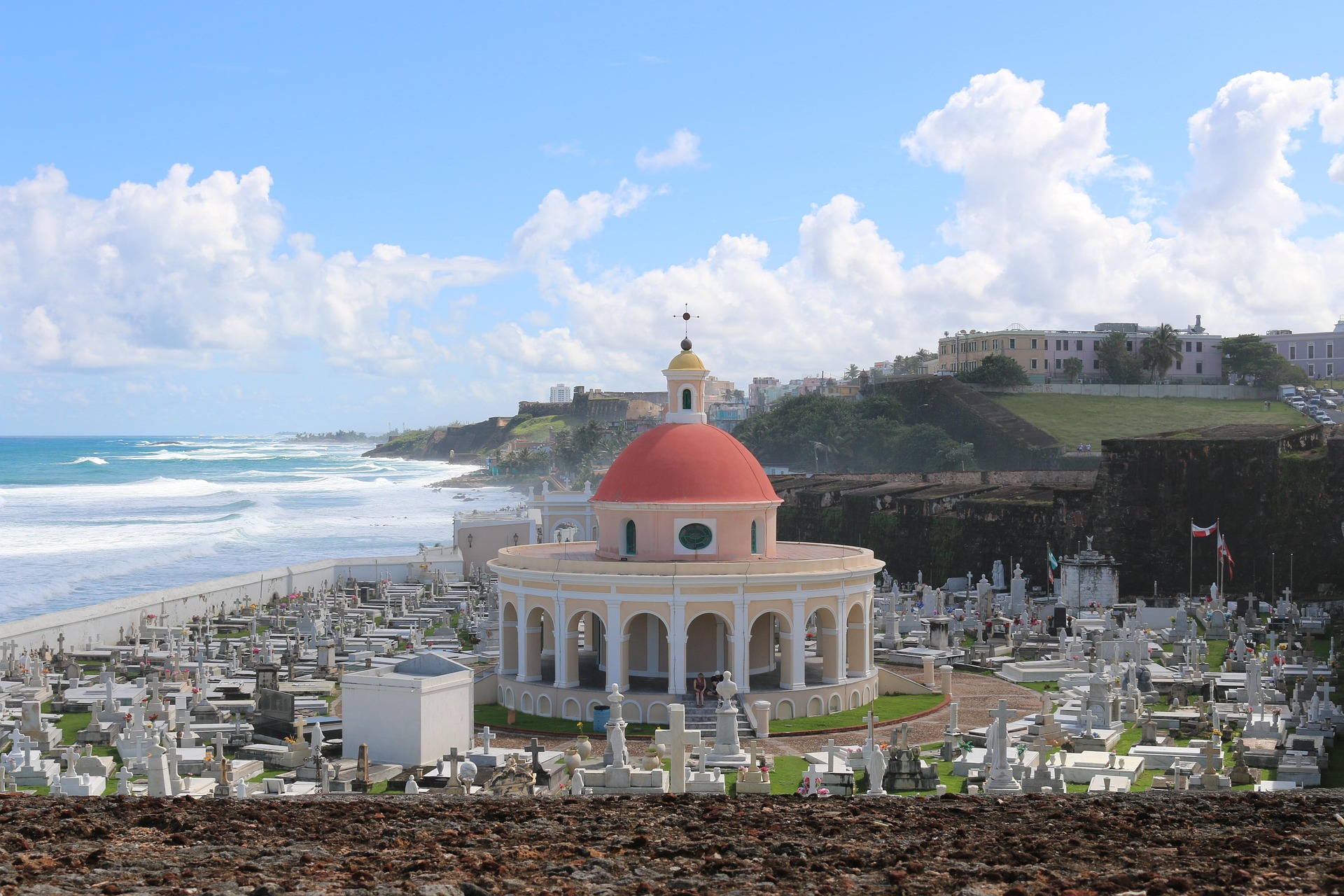
Territorial residents are effectively only “citizens on paper,” as they are governed by federal politics that they have no electoral representation in the body that shapes trade laws, shipping restrictions, and other economic regulations that apply to the territories regardless of their consent. When federal economic policies raise consumer prices or restrict trade routes, for example, residents can be forced to absorb the costs. When military policy expands US presence in places like Vieques, the people who are most affected by this have no say over the commander-in-chief. Puerto Rico’s location has made it strategically valuable to the United States, leading to a strong military presence on the island and to security decisions imposed on the communities by leaders they cannot elect.
As every American child learns in history class, the United States was born out of revolt against “taxation without representation”. This phrase is an ideological cornerstone of American democracy, and today it is emblazoned on the license plates for Washington, DC as part of the capital’s own statehood movement. Yet, today, the United States enforces a system that reflects the very injustice it once revolted against.
There have been decades of attempts to dismiss the protest slogan of “taxation without representation,” often rooted in the argument that territorial residents technically do not pay federal income tax. But this is misleading. Many residents pay federal taxes, such as payroll taxes, import taxes, and other federal levies. More importantly, though, the right to vote has never depended on tax status. Full-time students, retirees, and unemployed Americans all vote without paying income taxes. Representation should never be viewed as a financial transaction, but instead as a democratic principle and an inalienable right.
What makes this even more shocking is how politically unthinkable it would be for this to occur within the states themselves. Imagine telling Californians they could retain their citizenship but lose their voting rights, or telling all Texans that Congress would govern them without representation. The outrage would be intense and immediate. Is it acceptable only because the affected populations live thousands of miles away and speak different languages?
Part of the answer is widespread public ignorance about the politics of US territories. A Morning Consult poll found that only 54 percent of Americans know that people born in Puerto Rico are US citizens, and only 37 percent of Americans ages 18 to 29 correctly identified this fact. When nearly half of the country does not recognize Puerto Ricans as fellow citizens, it is not a surprise that even fewer understand that territorial residents cannot vote for the president. The path to change lies in raising awareness of this issue. Online platforms such as TikTok and Instagram have become sites of political education through which young people from Puerto Rico, the Virgin Islands, and Guam can address this dilemma.
The US governing relationship with its territories is not one defined by constitutional mandate. The Insular Cases are controversial, ambiguous, and criticized even by sitting Supreme Court justices. This whole system is objectively un-American, as it denies millions of citizens a voice in a democracy that governs them. The United States can choose to defend this ambiguous fiction, or it can practice a true democracy–one that applies to everyone.