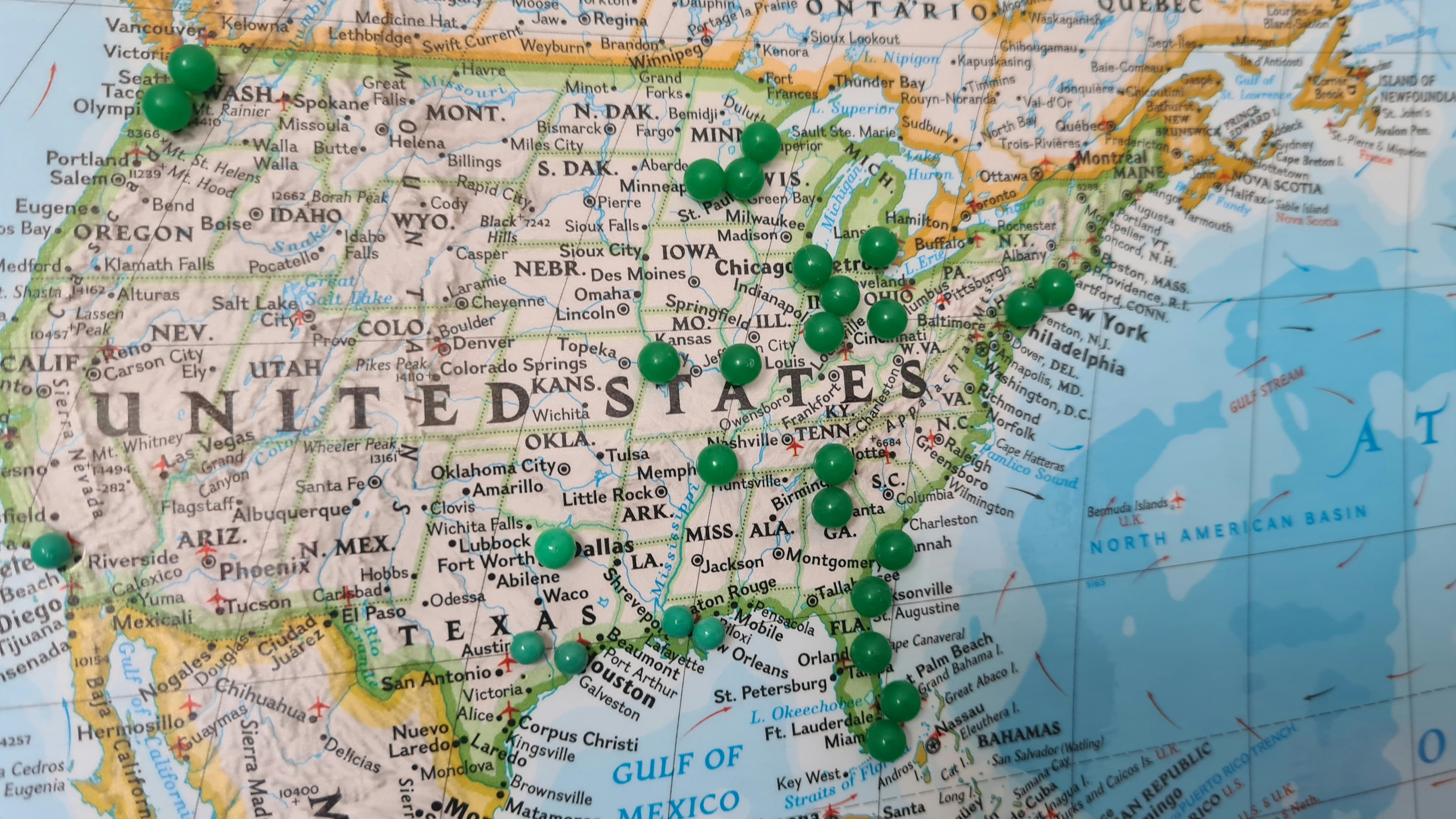
Though Brown University boasts about its diversity statistics, it can be difficult to find students with vastly different political views on Brown’s campus. Brown is overwhelmingly liberal, with a mere seven percent of the class of 2030 identifying as conservative and a whopping 73 percent identifying as liberal. While Brown prides itself on having students from every state, the concentration of students’ backgrounds is lopsided—many rooms are filled by students from epicenters like New York City or the Bay Area, with just a handful of students from more rural areas. College should be a place of great diversity, but many schools like Brown replicate the political silos of the broader American culture. One way to bridge the divide would be to allow more exchanges between students of different institutions. As such, students at Brown, like students at many other universities, could benefit from a “study away” option that would allow them to attend other institutions within the United States to gain exposure to people of different backgrounds and beliefs—particularly more conservative ones.
Study abroad programs began with a similar aim. They originated in the wake of World War I with the goals of fostering cultural immersion and improving communication and relationships between nations.
Almost 300,000 American students studied abroad in the 2023-2024 academic year. Although only 5 percent of them majored in a foreign language, students concentrating in other fields often select countries where they can improve their fluency in another language. This is one reason why one-third of American students opt to study in either France, Spain, or Italy. Plenty of students, however, are not necessarily interested in a new language and instead want to live in another country to gain new perspectives and experiences.
It is not necessary, however, to cross international boundaries to meet people with very different beliefs and backgrounds and form connections with them. For example, if an Ivy League student from the Northeast spent a semester at a regional university in the South or the Midwest, they would get a completely different experience with an entirely new cultural environment. The inverse is also true: Students who attend conservative schools or large universities in rural areas could gain new perspectives spending a semester at liberal arts colleges and universities in and around cities that lean more liberal.
Forming connections with people from different parts of the United States with diverse political outlooks is particularly valuable given the political silos and partisanship that plague America today. Much of this partisanship comes from people not understanding the lived experiences of others on the opposite end of the political spectrum.
The goal of such a “study away” program would not be to force students to change their political beliefs. Instead, it would enable students to understand why people in other places—perhaps with different socioeconomic opportunities—hold the political views that they do.
Brown has already acknowledged the value of programs like these through its embrace of the Brown-Tougaloo Partnership, a program between Brown and Tougaloo College, an HBCU in Jackson, Mississippi. Through this partnership, students have the chance to experience a very different type of college life.
The Brown-Tougaloo partnership can serve as a model for how to design study away programs. Like the partnership, programs should be designed as an exchange between schools with different student body compositions, programming, and geographic experiences. The idea is not to have a student from Brown go to Vanderbilt, two prestigious universities with students from generally similar educational backgrounds where the main difference would be the weather and campus architecture. Universities should instead encourage students to experience life on a campus very different from their own, at minimum in terms of the beliefs and backgrounds of the student body. For example, if a student from Brown were to spend a semester at Hillsdale College in Michigan, they would interact with a largely conservative student body and meet many students with deeply-held religious beliefs. They could take classes led by conservative professors.
A successful program would also feature aspects that prioritize immersion outside of the classroom and the bounds of the university. Students should not spend their time just with the people they are participating in the program with, but they should also connect themselves with the communities surrounding the university by engaging with community organizations and local businesses. A semester at Hillsdale could include attending city council meetings and participating in the school’s GOAL program, which involves volunteering throughout the Hillsdale community. Participation in such programming would introduce students to local residents and give students a glimpse into life in a conservative small town in Michigan. The reverse would also be true: A student from Hillsdale would get a completely different experience by spending a semester on College Hill.
The exact specifics of any given program will vary, but a successful one would also require universities to build relationships with a wide range of host communities in other places. The desire for cultural immersion and broader understanding spurred the foundation of international study abroad programs, and those principles ought to be applied to a revamp of domestic options a century later. The commitment may not even have to be for an entire semester. Perhaps schools with different break schedules could have students on spring break visit another school and attend classes for a week or two. Schools could even create three-week summer programs for their students and students from other places to spend time together in a learning environment. Departments could look at curricular offerings at other places to make sure that these offerings count toward credits in a concentration, encouraging students to give the experience a try.
Admittedly, even with accommodations based on schedules and time, the demand for this kind of domestic cultural exchange is likely to be less than it is for foreign study. But for students who want to better understand America, its policies, and its people, this would be an attractive option. Students interested in political science, American history, and public policy might see this as an opportunity for greater immersion in their areas of study.
The purpose of studying abroad is not just to travel somewhere else; it is to live somewhere else long enough to understand the perspectives of other people and discover the common bonds we share as humans. In a country intensely divided along partisan lines, we need to forge new bonds here at home as well as abroad. Studying abroad does not need a passport, just an open mind.