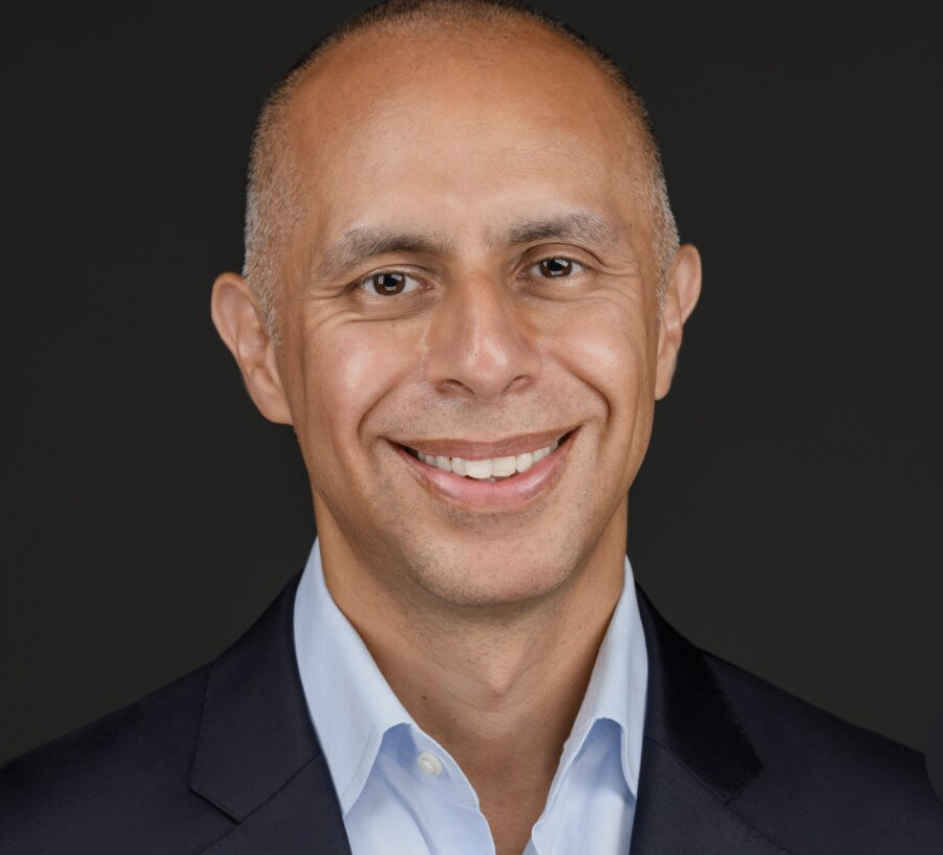
Amid mounting debates over what the future of public education will look like and the Democratic Party’s role in shaping it, questions of accountability, innovation, and institutional reform have come to the forefront. For Jorge Elorza, these questions are both personal and longstanding. A former two-term mayor of Providence, Elorza has worked at the intersection of policy, politics, and community, addressing one of the state’s most underperforming school systems. Now serving as Chief Executive Officer of Democrats for Education Reform, he has become a leading national voice advocating for policy that is outcome-driven: a departure from bureaucratic stagnation in education. In this interview, Elorza reflects on the political incentives shaping education reform, the tension between institutional loyalty and student outcomes, and how to strengthen public education in ways that better serve families, especially those most often left behind.
Sofia Segarra: Given that only 2.4 percent of high school seniors in Providence attending traditional schools meet grade-level math standards, there is a clear sense of urgency for reform. Since democratic governance tends to be slower and consensus-driven, how should this urgency be reconciled, especially when reforms often require negotiation with unions, local communities, and elected officials?
Jorge Elorza: The Democratic Party has deep political alliances with teachers’ unions, which are very opposed to reforms. Thus, we have elected officials opposing some of their biggest political supporters. Democrats haven’t talked about K-12 education policy in a decade, which has narrowed our imagination. There is a convergence between trying not to upset powerful interests with a lack of deep-seated policies, resulting in the worst of both worlds. You have a policy environment that’s demanding change, but we can’t deliver. Regarding the Democratic Party’s broader challenges, education is typically not one of the first issues pointed to, but I believe that K-12 education is Exhibit A. We become defenders of the status quo who protect powerful interests, as opposed to the families we should represent, which tells the story of how the Democratic Party has gone adrift.
SS: You have previously suggested that Democrats have become more aligned with “elite institutions” rather than with the everyday sensibilities and circumstances of families, particularly in debates revolving around education. In policy terms, what could it look like for the Democratic Party to realign itself with working-class voters without abandoning commitments to equity, inclusion, and protections for marginalized groups?
JE: The party has been silent on educational outcomes. When it comes to K-12 education, we have mostly focused on inputs, embracing a governance system that is overly bureaucratic. Policies are important, but implementation is where reforms go to die. Basics, such as holding institutions and individuals accountable, have been sorely lacking. There’s a fundamental misalignment of incentives because in public education, you don’t actually have to deliver results or earn families’ trust: You just have to respond to the needs of vested stakeholders. Yet, when the system doesn’t provide alignment, leadership can. From the governor on down, there needs to be accountability for every dollar spent. If better results don’t arise over time, we have to try something different. That’s why we need to hire officials who are in it for the right reasons.
SS: When reanalyzing policies that already exist, how should leaders balance the political risks of acknowledging potential failures with the need for honest assessments that are outcome and metric driven?
JE: As elected officials, we are supposed to lead when the moment calls for it, and that’s exactly what’s necessary in K-12 education. There will always be pressure from various directions. But as an elected official, you have to balance those tensions in the public interest, which has not happened. We need to push officials to the leadership qualities that got them elected in the first place.
SS: At the national level, recent efforts to dismantle the US Department of Education and transfer its major programs and funding streams to other federal agencies have been framed as a way to “return education to the states,” as explored by Secretary of Education Linda McMahon. How do you interpret this restructuring, and what are some potential consequences for accountability, coordination, and equity across states that could begin to unfold?
JE: The knock on Democrats is that we’ve become defenders of institutions and the party of the establishment. As President Donald Trump demolishes these institutions, the natural instinct is to resist. But America chose President Trump over us. The message that we leave with voters cannot be that we’re going to resist the other side at all costs. Currently, the public is in an anti-institutional, pessimistic mood where they want change. Whenever we’re confronted with these challenges, we have to support reforms that deliver on what the public actually needs.
SS: With key programs for low-income students, English learners, and other marginalized groups being shifted to agencies that lack primary education expertise, what risks does this pose for making sure that these vulnerable student populations have consistent protections and support systems?
JE: The administration is not trying to make these programs work. They have an ideological and political agenda to eliminate the Department of Education. By looking at educational outcomes throughout the years, it becomes necessary for us to question how the Department has done things. That’s where our side comes in. As I am not wedded to this Department or governance structure, my focus is and continues to be rooted in how we can best deliver for kids, and I will continue advocating for that.
SS: You have articulated the need to adopt a “politics of abundance” in education in order to stray away from zero-sum thinking around reforms like charter expansion. What would an abundance-oriented education agenda look like, whether that would be in Providence or on a national scale, and how can policymakers pursue ambitious reform without ignoring economic and resource constraints?
JE: There are two sides to this: the regulatory and innovation sides. Democrats have embraced a very procedural and bureaucratic form of government, and we’ve embraced the regulatory state. There’s been good intentions behind that, but the road to hell is also paved with good intentions. What we’re left with is an overly legalistic environment where the ability to make management-related decisions within a school or district has been bargained away. It is now subject to collective bargaining, tying the hands of educators and administrators. Over the past 100 years, every aspect of our society has been transformed, but our schools look the same. Democrats thus should embrace bottom-up, community-driven innovation. Instead of funding bureaucratic institutions, let’s fund parents and children directly so they can make their own educational decisions, which will unlock innovations on the supply side, meaning new kinds of schools. Rather than just patching the policies and programs sitting on top of the operating system, let’s make it more innovation-driven, student-centric, and adaptable. We need an abundance mindset, not one rooted in scarcity in order to focus on reform.
SS: In the Democrats for Education Reform’s Abundance Education Agenda, it was emphasized that Democrats should engage more seriously with tools or mechanisms such as vouchers, Education Saving Accounts (ESAs), and charter expansion while simultaneously restructuring them to align with Democratic values. Rather than rejecting these mechanisms outright, what would it take to design them in a way that prioritizes the most vulnerable families, safeguards civil rights, and maintains meaningful public accountability?
JE: ESAs are the policy of choice. Democrats should embrace them because they empower families to decide their children’s education experience. In states that have embraced universal ESAs, which are all Republican, there is this bottom-up innovation, where educators that found these schools with these programs are becoming entrepreneurs. Over 70 to 80 percent of them are Democrats living in these Republican states who are seeing how these tools can be put to progressive aims. It’s not just progressive in theory: It’s progressive in fact. Unfortunately, ESAs have become branded as conservative or Republican, but there’s nothing inherently conservative or Republican about them. You can design them to be unaccountable subsidies for the wealthy. But you could also design them in ways that are accessible to families that need them the most.
SS: You have argued in favor of charter schools, furthering that they can create a “healthy competitive pressure” that improves traditional public school systems. Is there a point or threshold at which competition begins to destabilize public systems instead of strengthening them? How can policymakers determine that threshold?
JE: Democrats should stand for excellence. As policymakers, we should seek out what’s working and try to replicate it, so it can better serve more kids. If the sector that’s growing is charter schools because they’re excellent in delivering for families, then great. But if the sector that is growing because it’s delivering more for families is the traditional public school sector, then that is also great. We are governance neutral. All we look for is to deliver results for kids. When talking about the political aspect of this, the average voter is supportive of this. For such a long time, we’ve been so stubbornly committed to a certain governance model, whereas the public just wants great opportunities for their kids. That’s what we should push as part of our agenda.
SS: In your current role with Democrats for Education Reform, you are actively engaging with national education policy. How has your experience in Providence shaped your broader philosophy of education reform?
JE: Absolutely. One thing I’ve always prided myself on is keeping an open mind to information. If I’m proven wrong, I change. When I ran for office, I couldn’t say I was waving the education reform flag, because I didn’t even know what that really was. I ran for office to transform the schools where 90 percent of the students studied: the traditional public schools. When elected, I learned about the policy and politics of education in order to see how powerful the forces of the status quo and the entire bureaucracy are. There’s this quote I love, “If you really want to understand the system, try changing it,” and as I tried to change it, I understood what works and what doesn’t. Because of that experience, I came to believe that changing the massive bureaucracy is close to impossible. So, I’m going to embrace alternatives to the traditional public school system to deliver change for kids.
SS: Are there any lessons you gained from Providence that you think are widely misunderstood in national policy debates?
JE: Everyone comes into office believing that reforms in the past failed, but they’re going to figure it out. And the challenge that I put out, particularly for underperforming urban districts, is that there hasn’t been a single underperforming urban district anywhere that has indeed been transformed now, at least transformed from within. In regions like New Orleans, Camden, New Jersey, and now Indiana, it’s been the charter school movement that has really helped to transform them. But you can’t give a single example of a traditional school district that went from grossly underperforming to performing at a high level. It just doesn’t happen. There are structural reasons why it doesn’t. The faster that we can disabuse ourselves of this idea that even though it hasn’t been done in the past, I’m going to do it, the better it is for us to start thinking of ideas or policies that actually do move the needle.
SS: You’ve shared a story about how your guidance counselor, Lou Toro, intervened to ensure you took the entrance exam of Classical High School, a test-in magnet school, which fundamentally altered your life trajectory. How should education policy account for the important role of these kinds of informal, human interventions, and is it possible to design educational systems that replicate those opportunities at scale, especially for marginalized students?
JE: I’ve just been so fortunate to have people looking out for me, and I say that because I grew up with a number of friends here in Providence who are just as capable as I am but did not get that support. What we have is an education system where, in order to “make it,” you have to either overcome every obstacle or get inordinately lucky. Instead, we should be creating a system where every child is given the opportunity to achieve their full potential. Again, I’m agnostic about governance structure. If it can be done through traditional public schools, then let’s do it. If there are other ways to provide more of these opportunities, I think it’s our responsibility to make sure we’re not just exploring, but also employing all the tools in our toolbox to help kids thrive.
SS: You’ve criticized the ways Democrats have dismissed parental concerns about topics like race, gender, and sexuality in schools. How can policymakers balance those concerns with providing an education that is both inclusive and comprehensive, especially for students from marginalized communities?
JE: Democrats want to be as inclusive as possible, but first, they have to acknowledge that not everyone has that perspective. By drawing on my upbringing in an immigrant household, I think the world of my family. As Democrats, we’ve become more attuned to the mores of elite institutions than the sensibilities of ordinary American families. I’ve seen this play out where decent people have questions about why certain topics are treated a certain way, and those questions tend not to have easy answers. The party should be easing off the purity tests, not taking the maximalist position on things, and returning to classical liberal or universalist values. This means stepping away from an identity-driven world, respecting diversity, and looking out for cultural minorities without reducing folks to solely members of a group.
*This interview has been edited for length and clarity.