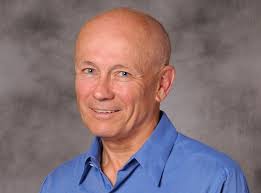
Brown University Professor Emeritus Peter Howitt, co-architect of the theory of sustained economic growth through creative destruction and co-recipient of the 2025 Nobel Prize in Economic Sciences, discusses the journey that led him from sorting wool in Ontario to reshaping the global landscape of economic thought. Sharing the prize with long-time collaborator Philippe Aghion, Howitt is recognized for developing a mathematical framework that helps to explain the ways innovation fuels growth while rendering older industries obsolete and transforming labor, policy, and society as a whole. In the interview, Howitt reflects on his academic beginnings and the decades-long partnership that fostered the advancement of growth theory worldwide. He discusses the intricacies between technological progress and social disruption, and why creativity, educational innovation, and competition policy are essential for equitable and balanced productivity in a highly globalized, AI-driven period. His story invites us to imagine systems where technological, creative, and academic innovation uplifts rather than excludes – a lesson that extends beyond economic or academic thought and into everyday life.
Sofia Segarra: You earned degrees in both Political Science and Economics, yet Macroeconomics has remained your central inspiration. What led you to pursue a dual degree, and what drew you to Macroeconomics as your primary focus?
Peter Howitt: I was a high school student working after hours during the week and on weekends for a man in my hometown of Guelph, Ontario, who was importing wool from around the world and selling it to textile mills in Ontario and Quebec. I was fascinated by the way the prices on his
teletype machine kept going up and down and coming in from Buenos Aires, South Africa, and Australia. He said, if you want to understand this, you have to study Economics, which is what I did. So I went off to McGill University, where if you wanted to do an Honors degree in Economics, it had to be combined with something else. So I decided to pursue my degree as a joint degree between Economics and Political Science. I’m glad that it was like that because it’s often hard to separate economics from politics.
My interest started to turn towards Macroeconomics in my final year at McGill, when I took a course where we carefully went through the original text of Keynes’s “General Theory of Employment, Interest and Money.” I continued to be fascinated with this as I went to Western University for my master’s degree. And then Joel Freed, Assistant Professor at Western, introduced me to Bob Clower’s work at Northwestern University, which went along the lines of Keynesian Economics. At this time, my interest in Growth Theory was spurred by a sabbatical leave that I took in 1987 at MIT, where I met my co-author, Philippe Aghion, with whom I’m sharing the Nobel. He brought his Microeconomic expertise, and I brought my Macroeconomic
knowledge for a collaboration that lasted another thirty-five years. We started working together, and we clicked.
SS: You’ve also described yourself as a student who once needed more guidance. What do you think your early education lacked, and how has that shaped your view on supporting students who learn differently?
PH: I don’t think there was anything wrong with my education. I was just a badly behaved teenager and was rescued first by the man in Ontario who hired me. He had a small office with two employees, and I would sort wool samples for him. He was very much a mentor to me. Once I became interested in Economics, the academic environments at McGill, Western, Ontario, and Northwestern provided the ideal conditions for me to continue to grow.
SS: You once expressed frustration with older economists resistant to new developments in Macroeconomic theory and empirical research. Do you think those early experiences shaped how you teach, mentor, and stay open to new thinking?
PH: It taught me that I didn’t want to become like that. Doing Economic Theory is something that young people are much more adapted to. It’s not quite like Mathematics, where people rarely make great discoveries after the age of forty. But in the kind of Economic Theory I did, which was fairly mathematical, I think that is true. People can continue to make good contributions, but beyond the age of sixty or seventy, they don’t really appreciate what’s going on at the frontier. Keeping up with everything and being open to changing your mind is hard work,
especially after you’ve been so successful in what you’re doing. This mindset was reinforced in me when I started thinking about Creative Destruction, because when young innovators try to break through, their new ideas are going to replace those older ideas on which the older generations’ reputations are based. It’s natural for the older generations to ignore this new-fangled nonsense and solely focus on the things they worked so hard for. I just didn’t want to end up like that. I was encouraged by Brown to take early retirement, which wasn’t really early, as I could still be teaching there. But I have been a Professor Emeritus for the last twelve years. Then I thought it was time for a new work-life balance. Until I retired, I used to work eighty-hour weeks, which was bad for my health and family.
SS: Have there been moments when you found yourself resisting change too – becoming what you once feared?
PH: I don’t think so. But then I think all of the people that I saw weren’t aware that they were doing that either. So it’s not really for me to judge.
SS: You began collaborating with Philippe Aghion in 1987 during your sabbatical at MIT, meeting weekly to exchange ideas and research. How did that close partnership shape your joint theory of Creative Destruction, and in what ways did it influence your path as a leading researcher in economic growth?
PH: Everything that I’ve done on the subject, I have done with Philippe. Our skills and personalities complemented each other very well. He was much more focused on this Growth
Theory than I was. I’ve always had a lot of curiosity and was interested in moving in other directions. He often urged me to focus on Growth Theory. I enjoyed doing it, but I enjoyed doing other things too. Without his urging, I would have wandered off and never really accomplished what I did.
SS: Your collaboration with Philippe clearly led to lasting contributions. When you published A Model of Growth through Creative Destruction in 1992 and submitted it to Econometrica, did you have any sense that the ideas in it might one day earn you the Nobel Prize?
PH: It never crossed my mind. I know he was very enthusiastic—I was also enthusiastic, to an extent. I realized just from my colleagues’ reactions, excitement, and favorable feedback, that it was an important paper. We have done a lot of things since the original paper, published thirty-eight years ago, but none of them have surpassed that original contribution that set the framework for everything else.
SS: When you wrote The Economics of Growth in 2009, what were your goals for making Growth Theory more accessible, and did you expect it to shape how the theory is taught and applied today?
PH: That was our first book, where we largely focused on Endogenous Growth Theory, and it was aimed at exploring various implications of our original ideas. We approached these ideas in different directions in terms of how growth is affected by and in turn affects a
variety of different aspects of economic life, including international trade, competition, education policy, and the environment. It was primarily aimed at graduate students and our colleagues. Later on, in 2009, we tried releasing a version aimed at undergraduates, which boiled down complex mathematical ideas while covering the same ground.
SS: The Theory of Creative Destruction, for which you were awarded the Nobel Prize, describes how innovation brings both creation and loss, as advancements render older industries obsolete, which impacts workers and entrepreneurs enduring the transition. How can educational and labor systems or policies be restructured to help individuals adapt and thrive within these cycles of creative destruction, especially in such a globalized world?
PH: Regarding labor market policy, a model for this is the sort of flexicurity system that many Scandinavian countries have, where maintaining a strong social safety net and ensuring workers who are displaced by innovations are taken care of is prioritized. Through retraining programs and access to new forms of employment, workers can transition into emerging industries, allowing them to benefit from technological advancement rather than be harmed by it. Every major technological change destroys the value of some jobs, but it enhances the productivity of others. We can incentivize firms to adopt technologies that make their workers more productive instead of replacing them. This is being done in other European countries, where they make it difficult to fire long-time workers. If it’s impossible to fire workers, it may be impossible to make the needed changes to advance. On the other hand, if you make it difficult, it strengthens their incentive to find product-enhancing innovations rather than worker-replacing innovations, which fortifies the incentive for innovators to come up with these
productivity-enhancing innovations. That’s just the beginning. Many things can be done to steer technology in the direction that emphasizes the productivity-enhancing aspect and minimizes the losses to people who don’t benefit. In the end, we all benefit. The people whose skills were devalued by the First Industrial Revolution were long gone. They lost when mechanized or textile machines started replacing their highly valued skills rooted in working by hand. Since then, we’ve all benefited from this. But I think we would facilitate the whole process if we resolved the conflict harmoniously. We would have less political opposition to productivity-enhancing innovations if we purposefully included people who might otherwise be harmed by them.
Regarding education policy, it depends on the country. If you’re talking about an advanced economy like the United States, any European country, or Canada, these countries rely on leading-edge innovations. They’re not copying as many foreign technologies. In order to really have a thriving economy, you need creative people. And I think that Brown does a very good job of encouraging this. The students that I taught at Brown were very creative and stimulating. In international student tests, the United States has been falling behind other countries regarding formal learning. But in my experience teaching graduate students, many of whom come from countries with amazing academic credentials, they are not as creative as American students. We know already that the value of primary and secondary education lies much more in teaching human skills than in informal learning. Recent research has reinforced that idea. An essential skill in today’s society is being creative and open to new ideas, which American students have done well, and is one of the reasons why the United States is leading the world in cutting-edge technology.
And the third policy that is important for maintaining our leading edge is competition policy. Industries must not get captured too much by the technological leaders who, at one time, were disruptive upstarts but are now doing things that block the next generation of disruptive upstarts, which they do through preemptive mergers, patent thickets, lobbying, etc. And we want to make sure that industry leaders have an incentive to innovate and stay ahead of their competition, rather than trying to block the competition.
SS: You’ve emphasized that technological change—especially with artificial intelligence—should enhance work and productivity rather than replace labor. How can we effectively achieve this today, when AI often risks reducing productivity, livelihoods, and even creative thinking?
PH: We don’t yet know exactly what the implications of artificial technology are going to be. It’s a general-purpose technology that affects us all and can be applied to various industries. We’ve had lots of other disruptive general-purpose technologies that have led to widespread predictions that this will lead to mass unemployment and that we’re never going to have labor that has been valued as it has before. And those have all been proven to be wrong because, as new occupations arise, new ways for people to earn a living are created. Wholly, the share of wages in national income has remained constant. Labor has benefited as much as capital from technological progress in the long run. There’s nothing in the theory that guarantees this will happen, yet I’m hopeful that it will—that is, I’m hoping that artificial intelligence and these technologies will ultimately benefit workers rather than replace them. At first, general-purpose technology like this doesn’t even appear to be raising productivity, yet there has been a lot of
investment in technology. There’s a shakeout period where everybody is investing to become the leaders in new technology, but it hasn’t raised productivity yet. At first, what you see is a lot of expenditure and no output. It’s going to take decades before we see what’s really happening with this and see who’s going to benefit. New technologies that you might think are going to replace highly skilled workers often end up making them more productive.
It’s amazing to see all of the things computer technology has done to summarize research and suggest treatments when it comes to cancer, etc. And you might think, that’s going to replace the skills of people you would go to for your diagnosis and prescription. But, it’s just as likely that it’s going to make them better able at their job. There is human creativity still that is not yet embedded in artificial intelligence models that I know of. Large language models don’t really generate ideas spontaneously—they imitate patterns found across massive datasets. Maybe, at some level, we humans do something similar. Still, I feel there’s something more to creativity than replication. The honest answer is: we just don’t know yet.
SS: What are the most efficient ways to foster an atmosphere between universities, private industries, and government institutions that ensures that technological innovation drives economic growth and addresses broader sociocultural and political challenges?
PH: I think that in the US experience, what has worked in the past, when trying to foster technological progress that will benefit many, is for the government to spearhead efforts to coordinate and set standards. That’s what happened when the Department of Agriculture started encouraging land grant universities to spread new technologies for agriculture, resulting in
tremendous bursts of productivity and agricultural growth, freeing people up to go work in manufacturing and other things. That happened in the course of the tech boom with the IT revolution in the 20th century, when the Department of Defense set the protocols needed for the development of the Internet before it became what it is now, and subsidized research which led to the development of the first electronic computer, general-purpose programming language, and operating system. Universities have to be open to this collaboration as well as businesses, but there’s always a risk involved with universities getting too close to business. Academic research is not supposed to be for-profit research. Yet there are tremendous benefits that academics can get from working with real-world problems that require abstract and theoretical fundamental solutions. Some of the best advances in computer technology have come about that way through places like the Bell Labs, which have given contracts to academic researchers and have led to Nobel Prizes, even though the Bell Labs’ primary goal is to make profits for telephone companies. So that’s what I would recommend that we continue doing.
SS: Thank you for your time and generosity today—your thorough insights and inspirational work are truly invaluable and will continue to guide future scholars and minds for years to come.
*This interview has been edited for length and clarity.