The BPR High School Program invites student writers to research, draft, and edit a college-level opinion article over the course of a semester. Tariq Lawal is a senior who is homeschooled.
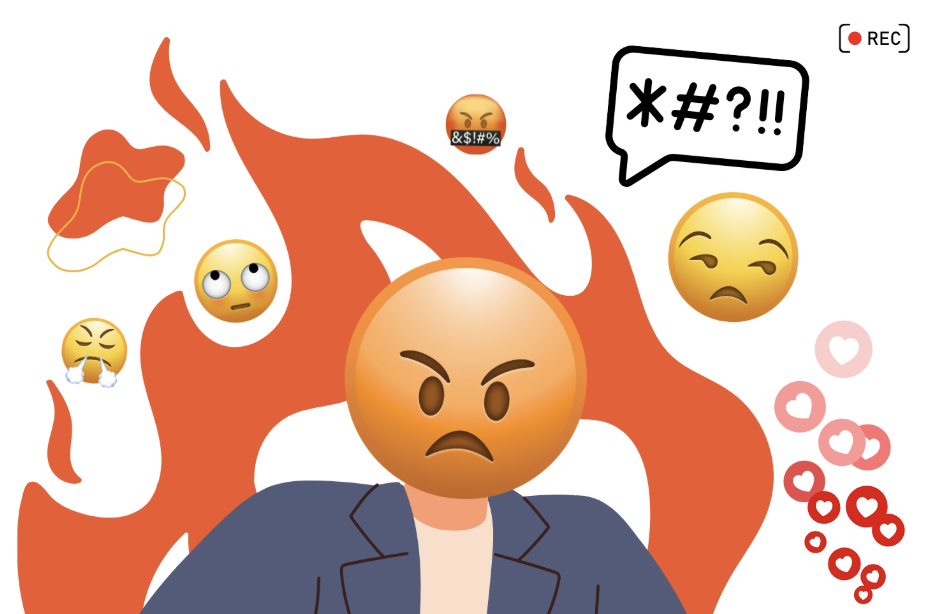
Every hot-button issue now gives us the perfect opportunity to show others how “hot” it made our heads.
On the Internet, particularly on social media, outrage has almost become a currency and an expectation. It is now a way for people to signal their stance. We show allegiance so we do not get judged by others—often strangers we will literally never meet. In the rush to signal our beliefs and values, our “anger” is becoming increasingly performative.
“Performative outrage” is a public display of anger or any strong negative emotion in reaction to urgent societal issues or even a recent event, usually with the intent to signal virtue and garner validation from others. In some cases, it is the act of being angry simply for the sake of being angry.
Anytime I log on to any of the mainstream social media platforms, whether it is X, which I personally consider a cesspool for angry people with opinions, or even TikTok, which I believe is more light-hearted but filled with too many unsolicited “hot takes,” I almost always come across someone being outraged about something. There is always something to be pissed off about and someone ready to make others aware of how angry they are.
Hamish McKenzie, Substack’s cofounder, stated in his TED talk that we are in the age of “chaos media.” I agree because now that everyone has a personal platform, they do not only share their daily fitness routine or their “get-ready-with-me” clips, they also share how outraged they are about current events. This shift has made spending time on the Internet an exhausting experience for those of us who are trying to simply stay updated and connected without the constant digital noise and negativity.
Either a mutual friend is offended by a viral tweet and uses their Instagram story as an outlet to vent angrily or a total stranger recommended by the algorithm is screaming at me through the screen about recent policies of the current administration. Other times a group of people is calling for a public figure to be canceled. We cannot escape the outrage.
Our feeds are filled with “rage bait,” which refers to online content that was created with the intention to provoke. Oxford even coined it their “Word of the Year.” Rage is becoming an essential aspect of today’s digital experiences. If you are an avid user of social media, you will often come across content that elicits a feeling of irritation, disgust, or anger, even if it is mild.
But beyond the outrage we feel inside, we must somehow demonstrate that we are outraged. And you will be rewarded handsomely for it with a heap of likes and comments. These days, it seems you must always signal your outrage to others, even if you are not personally concerned by what is going on. Those who do not signal outrage are deemed “nonchalant,” Gen Z’s way of calling someone “indifferent or uninterested in the world’s affairs.”
Being “nonchalant” gets judged harshly in certain circles. How dare you not care and constantly show others that you do care? That is an abomination. So, you had better just make TikToks to discuss the “political and economic state of the world,” as Jaden Smith wants us all to do, letting the world know where you stand on everything from climate change to reproductive rights.
To some, it is better to be “performatively outraged” than to say nothing. Getting outraged is a normal human reaction when we come across something that does not sit right with us. In fact, I would be telling a big lie if I claimed that I have never been outraged at seeing opinions that do not align with mine online. I even get outraged when I see strangers eating dishes I would not try myself. I give “bombastic side eyes” to anyone who enjoys eating seafood boils because I am allergic to seafood. It is wrong to enjoy what I can’t enjoy!
To be outraged is to be human. But when does our outrage stray into performative territory, why is it an issue, and what distinguishes it from justified anger?
Over the years, social media has become a go-to space, or as Elon Musk calls it, a “digital town square,” to engage in discourse about urgent matters. From racial injustice to transphobic violence, critical conversations often start in these corners of the Internet, which then seeps into the real world and sometimes leads to actual change.
Sometimes, conversations on these platforms never go on to lead to real change because the discourse is unproductive and shallow in the first place. In some cases, the discourse is not even about finding solutions to the problem being discussed but for people to feel morally superior or just virtue-signal. An ideal example is the Black Lives Matter protests of 2020, the discourse that came with it, and the aftermath of it all.
While the protests sparked mass awareness about racial injustices faced by Black people and other communities of color in the United States, many people felt the pressure to just signal their support for the movement without taking the time to actively tackle racism in their everyday lives and demand action to address systemic racism in all facets of American life.
Why speak up about redlining and how it affects African-American communities and keeps them stuck in generational cycles of poverty and struggle as a non-Black person when you can simply post a Black square or a visually-appealing infographic about racial issues instead?
In fact, it felt in the wake of the BLM protests that everyone felt pressured to be “woke,” not in the sense of being aware of injustice and being committed to dismantling systems of oppression, but in the sense of being ready to call anything that seems bigoted out and constantly signal how socially conscious one is. It felt like we were all trying to “out-woke” each other and see who could cancel someone or even a corporation first.
This was also the period of time when it became common among left-leaning people to police language online and even offline, and punish anyone who stepped out of line by using the wrong pronouns or terms by canceling them or even getting them fired, and also demanding that certain words be removed from the everyday vocabulary. While it was well-meaning to get rid of terms they believed were discriminatory or problematic, it also led to growing fatigue with progressive politics and the pressure to be “politically correct” that came with it.
That era then led to a point where netizens have become less interested in having productive, healthy conversations on these platforms and instead see it as an outlet to reassert what they believe, showcase how mad they are about something, and signal to those who hold similar views, so they can feel like they are part of the “in-group” and then come together to stand against.
Humans have always done this across history. We want to know who we can respect and trust and who to avoid and protect ourselves from. But as human beings, we are not monolithic, so I believe there is a problem with grouping others “out” and seeing anyone who does not share our beliefs, values, and traditions as threats. This us-versus-them mentality can lead to us becoming less empathetic with one another. It can even lead to us dehumanizing others for not sharing our stance, the “out-group.”
This phenomenon has worsened polarization and has made social media platforms like X an increasingly hostile space for meaningful dialogue that can lead to a middle ground on even non-partisan issues. It feels like all sides of the political spectrum cannot take a moment to discuss a way forward on tackling the problems we are facing as a society without subtly or blatantly attacking the other side.
We have gotten to a point in online political discourse where if you are not constantly arguing with anyone with opposing beliefs till they are defeated, you are not engaging in online discourse the “right” way. Do we really have to make an opponent out of others because of our differences? Among some conservatives, “owning the libs” has become a goal in itself, which means to humiliate or poke fun at those they deem liberal or woke (one of their fave words), and assert dominance with uncompromising, unabashed conservatism.
For conservatives, it is almost an obligation to trigger the “woke mob” and ensure that they are being “rage-baited” enough to prove once more that liberals, or in fact anyone that is in any way progressive, cannot handle hearing the truth. Likewise, it is getting common, especially among younger progressives, to want to see some “MAGA tears.”
We cannot stop people from being outraged. It is part of the human experience. We will be outraged when we see a video of someone eating noodles in a strange manner. We will be outraged by a post that denigrates others but tries to pass it off as “humor.” We will be outraged by out-of-touch people. Unfortunately for us all, we cannot eliminate “rage bait” or seeing something that gets us annoyed. But we can manage this emotion and get less performative with our outrage.
Admittedly, outrage has helped society tackle certain problems. Outrage was what led to much-needed conversations about sexual harassment and abuse in the workplace, with the #MeToo movement, which gained prominence in 2017, leading to significant social shifts. It was also how events in Palestine, Congo, and Sudan were able to get global attention in an era of seemingly never-ending digital noise. I believe outrage can lead to good when it is moral and driven by conviction and a desire to lead to tangible change instead of trying to signal how good we are to others.
Ultimately, before we pick up our pitchforks—or phones—to go on an angry rant about whatever is the hot gist of the day, or call for the cancellation of a public figure over a problematic tweet, pause and reflect on whether your outrage is performative or justified. Are we truly hot-headed in that moment, or do we just want our beloved followers and friends to see that we are? If we did that more, the internet would be less riddled with toxicity, and it would be fun for us all again.