The BPR High School Program invites student writers to research, draft, and edit a college-level opinion article over the course of a semester. Pooja Ezhilmaran is a senior at East Providence High School in Rhode Island.
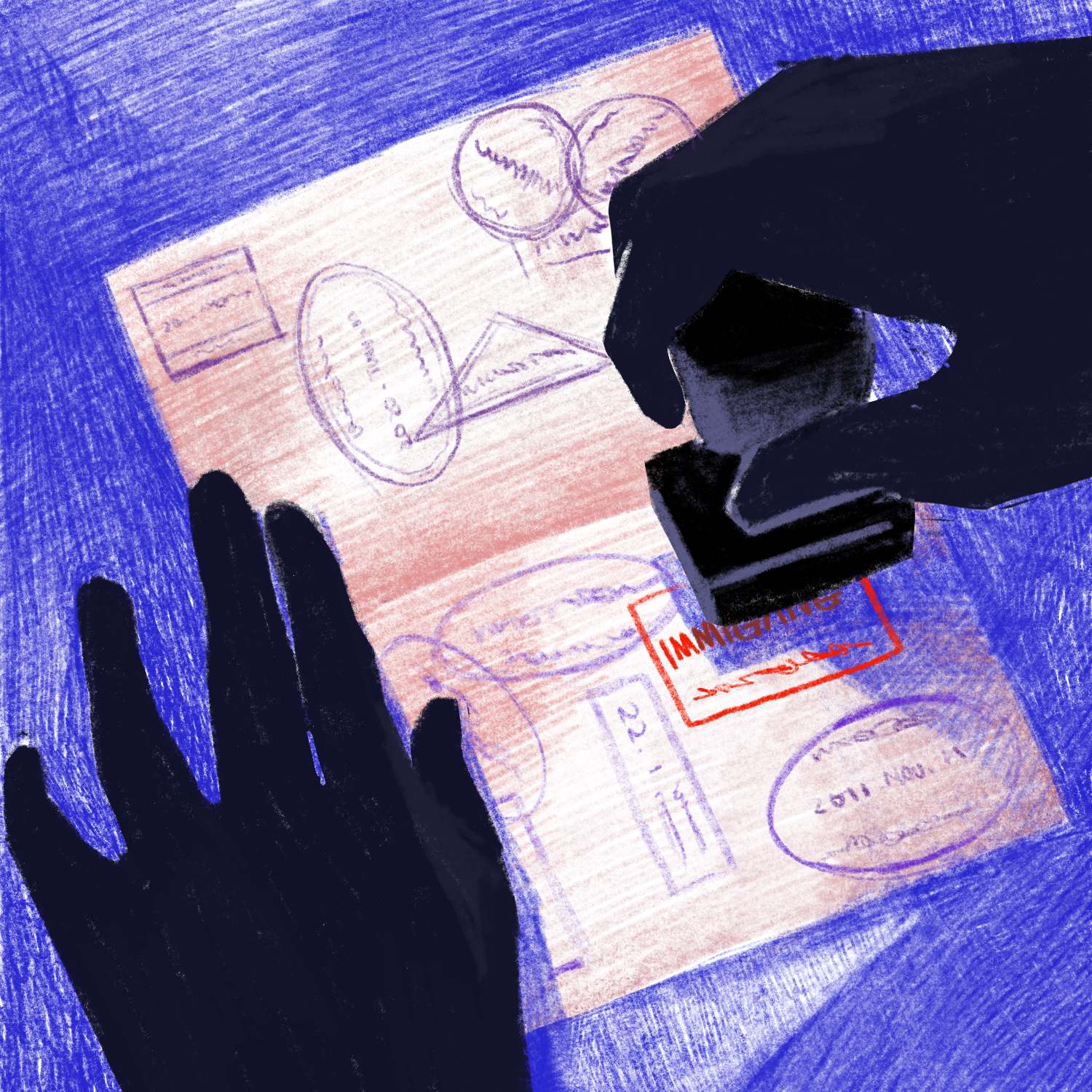
Every year, thousands of highly skilled professionals arrive in the United States on H1-B visas, fueling innovation and economic growth. But along with many come their children on an H-4 visa, who are known as “Documented Dreamers.” These children who grow up in America for the majority of their lives are American in every way but one: their legal status. Documented Dreamers reveal the contradictions in American immigration policies: while development in the United States has benefitted from the contributions of immigrant families, the state has denied these very families a future. The system creates an invisible immigrant population who contribute plenty to society yet remain excluded from the nation they were raised in. Even though they grew up in America through legal means, they still face the threat of deportation, limited access to education and work, and the constant fear of losing their protection and risking deportation after they turn 21. Despite contributing to American schools and communities, H-4 youth are caught in a legal limbo between opportunity and exclusion. The H-4 visa system does more than just hamstring the academic and professional development of its holders; far more inimically, it represents a mounting liability and lost potential for an ageing, increasingly coffer-strained America.
The green card system is one of the biggest barriers to H-4 visa holders’ success. The path to permanent residency can take anywhere from 40 to 100 years due to per-country caps, which set annual limits on the number of green cards issued to nationals of any single country, especially Indian nationals. As a result, thousands of children who grow up in America legally must either self-deport at the age of 21 or transition to an F-1 Student visa if their green cards do not come in time—forcing them to restart their immigration process. This process is expensive, costing families thousands in visa-renewal, application, paperwork, and legal fees. After this, their only stable option to secure a job is to partake in the H-1B lottery–a completely random selection process. Recently, only 25 percent of those who applied ended up receiving their visa—regardless of their job, the duration of stay in America, or what they could contribute. In 2024, out of the 758,994 people who entered, only 85,000 were allowed. The H1B system not only forces families to exhaust their resources on an uncertain, years-long green card process, but also subjects their US-raised children to a game of chance. This disregards the deep ties, contributions and potential of immigrants by making them start the entire immigration cycle again.
This time- and money- consuming process wastes years of human potential by trapping individuals in loops of temporary legal status and limited employment and academic opportunities. Furthermore, “Documented Dreamers” are a product of the investment that has been made into the American educational system, with over $18.614 spent on each child in public schools. The deportation of such individuals squanders the public investment and forces them to export the skills and innovations they have developed to a competitor nation.The loss is especially eye opening given the United States’ rapidly aging population and shrinking workforce, a time where the nation needs more young workers than ever before. Not to mention how this is the same system in which H1-B recipients donate over 12.9 billion dollars to the economy per year including for benefits that they do not receive including Social Security payouts, SNAP food assistance, temporary assistance for needy families, Medicaid, and more while also filling gaps in the technology and healthcare systems. The immigration system is in desperate need of reform.
For many H-4 visa holders, the obstacles affect their academic and professional lives beyond just the added legal paperwork. H-4 visa holders are ineligible for federal financial aid, student loans, and most scholarships, thus often forcing them to pay out-of-state or an international tuition fee for students who are not residents of the United States. These financial restrictions, in turn, dim their academic potential. In addition, H-4 visa holders are barred from holding work permits as minors. If their I-140 petition has not been filed, they are unable to pursue both paid and unpaid internships, grant-funded research positions, and many academic programs which require US citizenship or residency. Due to these strict labor regulations and aid restrictions, H4 students miss out on many career-advancing opportunities including internships, research opportunities, and certifications. This contradicts the United States’ commitment to meritocracy and equal opportunity, preventing motivated American-raised youth from gaining the necessary experience to advance academically and professionally.
Though US policymakers have introduced several immigration policies to address the challenges faced by immigrant children and families in the United States, none have been passed or were permanent. The Deferred Action for Childhood Arrivals program commonly known as DACA provides temporary protection from deportation and allows work authorization for immigrants brought to the country as children; however, it has not been enforced due to not passing both houses of Congress. The America’s Children Act seeks to protect children aging out or losing their dependent visa status when turning 21 by offering them a path to remain in the country legally by offering work authorization, updating priority dates to correlate with not long they have resided in America and allows them to get a green card when their parents without having to restart the process when after turning 21. However, it is not in place due to not being passed by both houses of the legislature. Similarly the Equal Access to Green Cards for Legal Employment act aimed to make the green card processes fairer through removing per-country caps that affect families from nations such as India or China. Although this has not even been implemented directly, expanding the EAD eligibility, or the authorization for a non-citizen to be able to work, from adults to teenagers would allow H4 children to work, research, get internships, loans, and more resources to better their education and careers.
Ultimately, the treatment of each four visa holders is not merely a policy failure but a conscious betrayal of American principles and self interest. We systematically educate such young people in our schools, integrate them into our communities, and benefit from their parents’ labor only to cruelly pull the rug out from them at the moment they are ready to contribute. To deny them citizenship after raising them as Americans is not only unfair but reveals a significant injustice and wasted opportunity for the United States that has been swept under the rug for too long. It is time to stop deporting our own future and grant these individuals the rightful place they have earned in the only country they have ever called home.