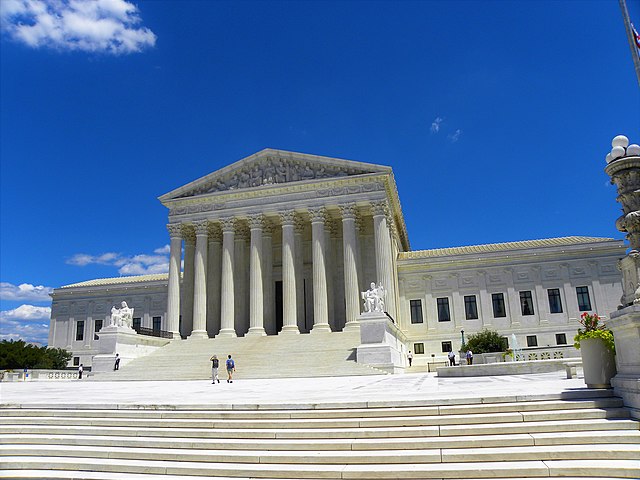
On September 24, 1789, George Washington nominated John Jay to the office of Chief Justice of the US Supreme Court, setting a judicial precedent for our nascent nation. On appointing nominees, Washington stated, “In performing this part of my duty, I think it necessary to select a person who is not only professionally qualified to discharge that important trust, but one who is known to the public and whose conduct meets their approbation.” He believed nominees should not only boast legal knowledge, but also good character and public approval.
Article II of the US Constitution enables the president to nominate Supreme Court justices to serve for life. The lifetime appointment was created to protect justices from political influence during their tenures on the Court. Over time, this mechanism of impartiality has been weaponized to perpetuate partisan ideologies. Presidents increasingly value political ideology over other factors when selecting Supreme Court nominees. The vague language of the Constitution has made it easy and permissible for judges to embed their own philosophies into their interpretations of constitutional law.
This prediction was made by Anti-Federalists, specifically in Brutus 11, where Brutus argues that lifetime appointments, meant to keep justices free from political influence, actually isolate them from both the people and the legislature in their decision-making. Further, Brutus points out that Article III, Section 2 of the Constitution enables judges to misinterpret the Founders’ meanings. And, because the document’s writing is often general and vague, judges may find it easy to fit their ideologies into their interpretations.
However, the Court was not always as polarized as it is today. Previous justices, such as Ronald Reagan appointee Antonin Scalia, would vote across ideological lines despite their personal or party beliefs. For example, in Kyllo v. United States, a case regarding whether using thermal devices on private homes qualifies as an unconstitutional search, which violates the Fourth Amendment, Scalia joined liberal justices in voting that it was unconstitutional. This vote contrasts with his personal policy beliefs, which favored being tough on crime and strict law enforcement. Despite these values, judicially, he was very pro-defendant. This could reflect his philosophy of originalism, as his Fourth Amendment interpretation is derived from the Framers’ intent to protect from unnecessary searches, particularly drawing from their opposition to general warrants and unreasonable searches by the British. Scalia represents an era of the Court where judicial interpretation and the Constitution trumped political beliefs, making for a judicial body dedicated to upholding the law of the land rather than furthering personal political agendas. This same sentiment is demonstrated by other justices such as Justice Anthony Kennedy, a conservative appointed by Reagan, who was often the Court’s swing vote. He frequently voted across party lines, supporting the right to same-sex marriage in Obergefell v. Hodges, along with protecting access to abortion in Planned Parenthood of Southeastern Pennsylvania v. Casey, despite these being traditionally liberal views. This culture of judges’ votes not aligning with their party’s traditional view reflects a time when constitutional interpretation was more important than partisan loyalty.
Further, this shift in priority is demonstrated by the rate of unanimous decisions in the Supreme Court. The history of the Court can be split into two periods: Pre-1941 and post-1941. In the former era, the court was unanimous in over 90 percent of the cases it oversaw, but after 1941, the dissent rate crept up to over 50 percent and has rarely fallen below that. Though part of this change could be explained by a change in leadership, as Chief Justice John Marshall stepped down, giving way to Chief Justice Harlan Fiske Stone’s decision-making style, it is not the whole picture. The pre-1941 period of unanimity, followed by the era of justices like Kennedy and Scalia (during which voting across party lines was not entirely uncommon) has ended, giving way to a time when the court is significantly more polarized.
As the Anti-Federalists predicted, politically driven constitutional interpretation is prevalent in today’s Supreme Court. For example, regarding universal injunctions in Trump v. CASA, Inc., the Court was asked to rule on whether federal district court judges could freeze the enforcement of a policy nationwide, rather than solely for the affected parties. The broader context of this case lies in the Trump administration’s attempt to block birthright citizenship for the children of undocumented immigrants and those in the country temporarily, and multiple judges issued universal injunctions due to the perceived unconstitutionality of the executive order. However, the final ruling was 6-3 along party lines: The conservative majority argued that, based on the Judiciary Act of 1789, there is no basis for universal injunctions as this never occurred in early American practice. The liberal minority argued that universal injunctions do have historical precedent in the form of taxpayer suits and bills of peace. Further, they stated that limiting universal injunctions would make constitutional rights a facade for those who cannot sue. This ruling demonstrates exactly the situation Brutus predicted: The same constitutional clauses can be interpreted in vastly different ways. All the conservative justices voted in a manner that indirectly limits the rights of immigrants, a historically conservative perspective, while the liberal justices voted to maintain those rights.
Additionally, the appointment process itself exacerbates partisan interpretation of the Constitution on the Court. Nowadays, political affiliation plays a crucial role in nomination as presidents select individuals who share their political agendas. The political nature of this process becomes even more apparent when the president nominates an individual with controversial views. Prior presidents, such as Dwight D. Eisenhower, a moderate conservative, often considered appointing justices who differed from their own ideological perspective. Eisenhower appointed William J. Brennan, a liberal Catholic Democrat, not only as a strategy to appeal to moderate voters in the upcoming election, but also in the name of representation. Similarly, Washington nominated justices to reflect the geographic diversity of the United States, with three from the north and three from the south. This is not to say that ideology has played no role, though. Washington and John Adams both preferred Federalist judges, while Thomas Jefferson sought out the opposite.
Due to the life tenure, a single Supreme Court confirmation has the potential to shape policy and law for years to come. The average Supreme Court term since 1993 has grown to 28.2 years, giving each justice long-term legal power. Over time, these stakes have been exacerbated by interest groups, with nominations no longer testing which individuals will uphold the Constitution most effectively, instead focusing on larger ideological battles spanning issues like abortion and LGBTQ+ rights. The number of media and interest groups involved in Supreme Court nominations has increased over time, from relatively little mobilization from 1930 to 1970, to becoming almost routine starting after Robert Bork’s 1987 nomination. Furthermore, the types of groups involved have shifted from those based on a nominee’s qualifications to now also mobilizing around ideological alignment. They have changed to using more grassroots and outside advocacy tactics, making an outside appeal to public interest and mobilizing the public to participate. For example, Bork’s nomination could be seen as the first modern nomination, filled with political lobbying and interest group involvement. Bork was seen as an extension of Reagan’s social agenda, particularly on the topic of abortion. Reagan’s anti-abortion rhetoric made liberals fear that if Bork was confirmed, he would vote to restrict abortion rights, giving liberal interest groups an incentive to mobilize. Bork’s nomination, in particular, marked a significant point in Supreme Court history, as the focus on ideology during his nomination set a precedent still evident in today’s nominations. This shift has made these confirmations look less like a vetting of judicial duty and skill and more like a political campaign.
A recent example of this politicization in play was the GOP’s rejection of former President Barack Obama’s 2016 nomination of Merrick Garland to fill Justice Scalia’s vacancy on the Court. Though Garland had long been considered a likely prospect for the Supreme Court, his nomination was opposed by Senate Republicans. Senate Majority Leader Mitch McConnell, mere hours after Scalia’s death, stated that any appointment by Obama would be null and void. He declared the vacancy would not be filled by Obama, but rather the president elected later that year. Garland’s high qualities and experiences, ones that certainly qualify him for the Supreme Court, were largely overlooked by Republicans. Political strategy took precedence—in this case, in the hope that Donald Trump, the then-presidential nominee, would nominate a conservative candidate instead.
Further, consider the nomination and confirmation of Amy Coney Barrett. Barrett’s predecessor, Ruth Bader Ginsburg, died within a month and a half of the 2020 election; yet, Senate Republicans rushed through Committee hearings to appoint Barrett for a lifetime seat a mere eight days before Americans finished casting their votes in the 2020 election. This belief that the nomination should be done by the incoming president no longer applies this close to an election.
The Anti-Federalists predicted the politicization of the Supreme Court over time, and it has become a reality in modern America. The Founding Fathers’ intent to provide justices with lifetime appointments weakened checks and balances on the Court, which permits justices to act at their own discretion with few repercussions. Additionally, the Court—meant to be an impartial body—has become partisan; justices often insert their own ideologies into the way they interpret the Constitution. Brutus, it turns out, was right.