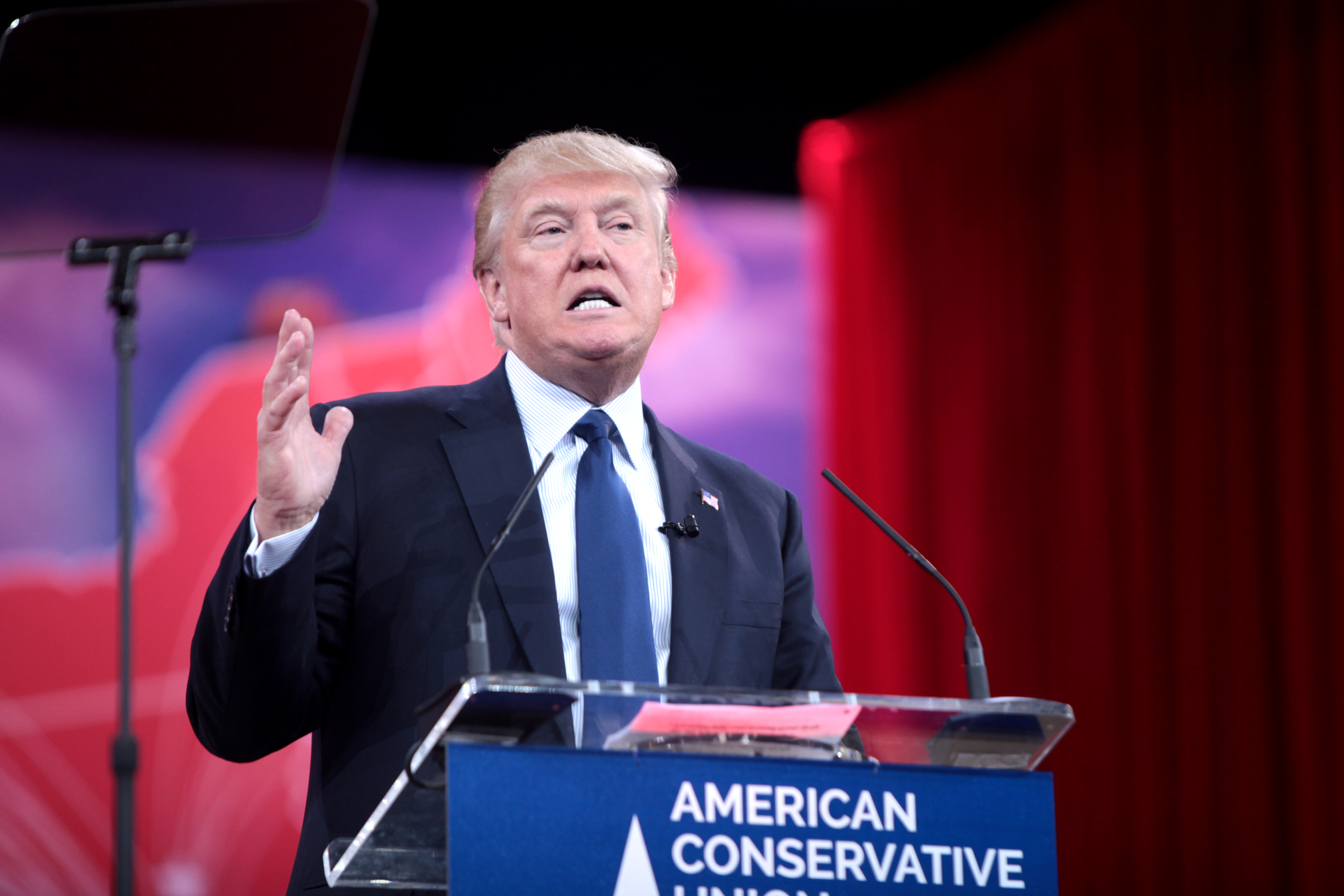
“I was always for IVF, right from the beginning,” then-candidate Donald Trump declared on August 29, 2024 in an NBC News interview. In his blue suit, white shirt, and red tie, Trump cemented his commitment to government-funded in-vitro fertilization (IVF) access to American voters. Once in office, Trump’s promise of IVF access would be put to the test. A February 2025 Executive Order describes “that our Nation’s public policy must make it easier for loving and longing mothers and fathers to have children,” implying that Trump would adopt a strong pro-natalist stance. Trump furthered this political platform when he declared himself the “Fertilization President” at a Women’s History Month event in March 2025. While on the surface it seems that Trump might be softening the MAGA stance towards reproductive healthcare, it is instead a political strategy. Trump is playing into both sides of his fragile far-right coalition of ‘tech bros’ and pro-life Christians to craft policy statements that openly support IVF but are unlikely to provide any meaningful increases in access for Americans. In essence, these statements convey that the Trump administration cares about Americans having babies, but the policies do not offer clear solutions that enable Americans to easily access and afford IVF care.
The cracks in the fragile coalition began with the 2024 Alabama Supreme Court ruling that effectively paused IVF treatments at several clinics by declaring that embryos were legally children. The ruling implied that when embryos were wrongfully handled during cryogenic storage, a key component of IVF, Americans had grounds to sue fertility clinics.
Christian religious circles aligned with the Make America Healthy Again movement hailed this court ruling as a victory for the pro-life side of Trump’s base. Instead of IVF, Christian religious groups propose treating the “root causes” of infertility by tracking patients’ menstrual cycles to help expose underlying conditions such as endometriosis. The plan, however, vaguely defines “root causes” of infertility and how Christian religious circles propose to treat these underlying causes. Several pro-life advocacy groups believed the president’s campaign promises to support IVF were simply political talking points. Instead, Trump recently announced a policy plan to lower the costs of IVF treatment and create more pathways for insurance coverage.
Members of the tech bro branch of the Trump coalition hope this support will increase birth rates in America, but this conflicts with the anti-IVF Christian right. Trump, however, needs to give the tech bros a political victory after Silicon Valley tycoons poured an estimated $273.2 million into Trump’s 2024 reelection bid. While the Silicon Valley tech bros want to continue to profit with minimal government interference, there are also darker, eugenicist undertones to their hyperfixation with birth rates. Pronatalism gains attention among American voters when gender norms undergo changes and demographics such as race begin to shift. In essence, the tech bro fascination with IVF comes from anxieties about falling birth rates among white Americans as more women pursue careers outside of the household.
The tech bros, however, still face a major barrier with the fervent convictions of the Christian right opposing the technology-based policy solutions that achieve the practical goals of their ambitions. With the large financial capital poured into Trump’s campaign by Silicon Valley’s elite, it seems that he simply convinced members of more religious circles that IVF expansion would still be negotiable under his administration to garner their support, despite his explicit claims suggesting otherwise.
Despite the critiques of Christian religious circles and pro-life activists, Trump continues to pursue IVF expansion as part of his policy platform. Trump’s plan to increase IVF access involves a deal with EMD Serono, the largest manufacturer of IVF drugs globally, and a subsidiary of Germany’s Merck, a major pharmaceutical manufacturer. The deal lowers the cost of fertility medications in exchange for providing the company with relief from tariffs. In the same set of IVF guidance, the Trump administration also announced new guidance to employers about offering fertility coverage directly to employees, like with dental or vision benefits, in an effort to increase insurance coverage.
While the policy seems effective on paper, its implementation does not fulfill the administration’s promises of universal IVF access in the immediate future. For example, the Kaiser Family Foundation’s report notes that the additional fertility coverage benefits are completely optional for employers, meaning that this plan will not lead to universal IVF access. Religious employers, who have a history of opposing reproductive healthcare coverage, do not have to provide this service for their employees. Discounts will also be offered through TrumpRx, a new government website Trump plans to launch in 2026 to sell medicine and therapies at steep discounts. The administration stated that low- and middle-income women will receive a steeper discount, totaling 2,320 percent of the deal price when purchased from TrumpRx. This description, however, does not offer much clarity into how the discounts will be implemented. Medication is not the only aspect of IVF treatment, as egg retrieval and implantation are also essential to the IVF process. It is unclear how the administration plans to help Americans cover the costs of the procedures associated with fertility treatment if insurance does not, or refuses to, cover the bill. The new IVF policy also stops short of mandating taxpayer-subsidized coverage after an intense lobbying campaign by pro-life advocates, bringing the viability of government funding into question.
In its totality, Trump’s policy enables the Christian far-right to restrict access to IVF and fertility treatments via funding mechanisms, while still giving public support to tech bro policies. The balancing act of drawing media attention to a new IVF policy that Trump can call a political victory while enabling his followers on the Christian right to prevent Americans from accessing subsidized fertility care keeps the coalition partially intact. The half-baked IVF expansion policy highlights the Trump administration’s lack of clear goals when it comes to reproductive healthcare and fertility. Trump ultimately cares about maintaining political viability in a polarized system by balancing the political goals of ‘tech bros’ and the Christian right as he uses IVF in a game of political chess.